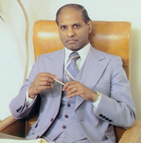
HOW ICONIC VIOLINIST ITZHAK PERLMAN FORCED ME OUT OF MY HOUSE AND ONTO A SUMMER ROAD TRIP

Sid Mittra
Ph.D., Economics
Emeritus Professor, OU, Michigan

Part I

A Fairy Tale

The place was Rochester, Michigan. The day was Sunday, April 6, 1970. The time was 5:29 p.m. I was in my Oakland University office in North Foundation Hall, deeply engrossed in working on my next book, trying to prove that the university made the right decision in simultaneously granting me an early promotion to a full professorship, with life tenure. Suddenly the phone rang, shattering my concentration. I answered the phone, assuming that my wife, Bani, wanted to know what time I would come home for dinner. 

“Hello, Professor Mittra. This is Bill, Associate Dean of the Music Department. How are you doing today?”

I responded in an angry tone: “Sir, you’ve got the wrong person. I am in the Economics Department and know nothing about music. Goodbye.”

“Sid, don’t hang up. I know who you are and I do want to talk to you. I want to make you an incredible offer that you could not possibly refuse. So, please hear me out.”

Then, without waiting for a response, Bill kept talking: “Itzhak Perlman — I hope you know this world renowned violinist — is coming to Oakland University as a special guest of our Music Department. He is going to stay here for eight weeks.” 

Itzhak Perlman

Still anxious to end this meaningless conversation, I advised Bill that, although I was impressed by his success in getting Perlman to Oakland, I am not into music and would rather not carry on this conversion any further.  

That’s when Bill threw me a curve ball. This is how he put it: 

“Here is my offer. It is not generally known that Perlman is paralyzed from the waist down and is wheelchair bound. We would like him to stay in one of our university subdivision homes. I understand that you live in our subdivision at 721 McGill Drive. Your house has a double-door entrance, which is precisely what he needs for wheelchair access. So, if you let us rent your home from June 15 to August 15 and, during that time, take a long vacation with your family, we will make it worth your while to accept our offer.”

Replica of our home at 721 McGill Drive
Our home had a specially built double door (not shown here)

After I caught my breath, I responded: “Bill, your offer is too good to be true. However, since my family is affected, I need to consult with my wife before making a final decision.”

Let me add here an important caveat. In 1970 when this conversation took place, I had never heard of Perlman. That is because at that time he was beginning to gain some reputation as a performer and he had started to accept invitations from various institutions to grow his reputation.  But just to find out what kind of a musician Perlman had eventually turned out to be, I did a Google search in 2020 and discovered the following. And that made me feel very happy.

”Itzhak Perlman is an Israeli American violinist, conductor, and music teacher. Perlman has performed worldwide, in venues that have included a State Dinner at the White House honoring Queen Elizabeth II, and at the Presidential Inauguration of President Obama. He has conducted the Detroit Symphony Orchestra, the Philadelphia Orchestra, and the Westchester Philharmonic. In 2015, he was awarded the Presidential Medal of Freedom.”

That night I had an intense debate with Bani about Bill’s offer. She said that while she was always fully supportive of all my decisions, in this case she didn’t think she could deal with all that would be involved during an eight week period away from home, traveling all the time, no less. Still, in the end, based upon my seriously flawed sense of adventure, I was inclined to accept the offer.  

The next day I did more checking, which revealed that we did not have a family member or friend who would be willing to accommodate our family for several weeks if we needed shelter on short notice. Even staying in inexpensive motels for two months would certainly be cost prohibitive for us. So, our only viable option appeared to be to drive around in our vehicle, carrying a portable tent, staying on camp grounds, and cooking dinner in the great outdoors. Our family had never done any of that, and the thought of pulling it off for such a long period scared the devil out of me.  

The last issue we faced related to our transportation. We had a 1968 VW station wagon that was much smaller than American station wagons. I figured that if I carried our luggage and tent on a roof top carrier, then the VW’s cargo space would be sufficient for the kids (Rita, age 7, and Robert, age 4) to have a comfortable space for playing and sleeping. 

1968 VW Station Wagon

In the end, I convinced myself that the chance of seeing America through this unique lens provided a once-in-a-lifetime opportunity that we could not afford to pass up. So, over Bani’s objections, I decided to accept the offer.  

The next day I signed a contract with the university. Bill generously added a special clause to the contract providing that if I needed more money to pull it off, he would gladly oblige. With that assurance, we were on the verge of traveling around the country in a unique fashion.  

Part II

Journey into the Unknown

  • The first day

On June 12, we packed our bags, loaded them, along with dry food, large bags of chips and bottled water into the VW, and began our dream trip. I had AAA maps with me (there was no GPS in those days) to guide me. Even if I did get lost, I thought, so what? One thing we had plenty of, was time. 

The first day turned out to be very eventful, but not in the way you might suspect. From Michigan we headed west through Illinois into Iowa before we stopped for the evening. 

However, the drama that unfolded inside the car during that first day’s drive was truly novel.  In those days, there were no laws against passengers riding in the cargo space without seat belts, so initially the kids had a ball playing monopoly (there were no iPads or cell phones in those days either), and having fun to their hearts’ content. However, after a few hours the novelty wore off and they started fighting with each other. Suddenly Rita screamed: “Mom, he is kicking me.” To that, Robert retorted: “She is exaggerating. I just touched her with my foot.” At that point, Bani reached back from the front seat, grabbed Robert and had him sit down on her lap. With no seat belts required and no rules against carrying a child on one’s lap on the front seat, Bani’s bold action created a new baby sitting technique that may have preserved our sanity. 

Settling down for the evening provided another challenge. Although I had practiced putting up a tent at home, it proved to be a difficult job. After the tent was in place, I unloaded our luggage and helped Bani prepare dinner. While we were busy taking care of these chores, the kids had been enjoying the swings in a nearby playground and having a ball getting some much needed physical exercise. Once dinner was ready, we sat around a camp fire and enjoyed our meal under twinkling stars. The truth be known, everything we did felt awkward and could have been done better; but after a day of stressful driving, no one seemed to care. Through all of this, of course, Bani’s calm and reassuring demeanor played a significant role in making it a day to remember. 

Finally, it was bedtime. The children were already fast asleep and Bani was still cleaning up after dinner. I lay down on my bed and said a thankful prayer: “Thank God, one day is over, and only 55 more days to go.” 

  • Rest of the trip

I would need many blogs to share in detail all the unique experiences we had on this trip. Our route took us across the northern tier of states, into Canada, to the west coast, down the west coast, across the southern U.S., and north along the east coast to Washington, D.C., before we headed back to Michigan. Our unique memories from this trip will last a lifetime.

Despite space constraints, however, I would be remiss if I did not invite you to visit my memory palace standing tall on four strong pillars. Two of these pillars represent scary experiences while the third one is amusing, and the fourth pillar is downright hilarious.  So please join me as we visit my memory palace together.    

Pillar One. Calgary, Canada. We had made reservations at a campsite in Calgary, which we had heard was unparalleled. When we arrived at the campsite, it looked like a sprawling big city with tents all over the place. The difference was that, unlike a city, there were no marked street signs and there were no street lights. That meant that if we got lost at night, there would be no way to find our tent until the next morning. The only good news was that we were allowed to park the VW next to our tent, as if that was of any help. 

After arriving at the campsite and unloading the VW, we put up the tent and allowed the kids time to enjoy the playground, after which Bani cooked dinner in the open air oven. Everything went like clockwork. Around 10:00 p.m. we decided to call it a day. It was pitch dark outside and I reminded myself not to leave the tent at night for any reason.  

It was around midnight when Bani woke me up to report that she heard a strange noise coming from outside the tent. Irritated, I told her that we had nothing anyone would want to steal so she should stop imagining things and go back to sleep. She woke me up again a few minutes later with the same observation. This time, I grudgingly picked up a flash light and carefully opened the tent door. I was shocked to see two glowing red eyes of a grizzly bear staring at me.    

Grizzly bear outside our tent in Calgary

Luckily, my flashlight did the trick. The bear didn’t like it and slowly walked away. That did not placate Bani, who was so petrified by the incident that she insisted that we move to the VW for the rest of the night. This time I acquiesced. We made beds for the kids in the cargo space, and Bani and I prepared to sleep on the two reclining front seats. It was very uncomfortable, but at least we were safe, or so we thought.  

As we were dozing off, the bear came back, and started pushing against the VW, trying to topple it. Not having any other options, while sweating profusely, I prayed to God for a miracle. Fortunately, after three failed attempts over an hour’s time, the bear decided to move on, presumably to annoy someone else. 

God must have listened to my prayer. 

Pillar Two. Las Vegas. This was our first visit to Las Vegas, so Bani and I decided to leave the kids with a babysitter in our hotel and spend the evening at a casino, enjoying a night of extravagance. 

Bani had never gambled, so she was apprehensive about losing money. I suggested that she might not mind losing $25.00 (a significant amount for us in those days) and that she should gamble that amount to her heart’s content. In the meantime, I planned to go around the casino taking pictures and doing a little gambling. We agreed to meet in the lobby after two hours. I could sense that Bani was both excited and apprehensive about her pending gambling adventure.  

I returned to the lobby as planned but could not find Bani. Not knowing where to look, I frantically searched for her at the gaming tables and surrounding areas, but had no luck finding her. Finally, in desperation, I asked an employee to help me locate her. When he heard that this was the first time Bani had been there to gamble, he suggested that I look for her in the slot machine section.  

I was blown away when I saw her sitting in front of a slot machine, pulling the lever each time she put a dime in the slot. I noticed that she was down to 20 cents. She explained that when she was down to $1.00, she won a whole bunch of dimes, which kept her going; but now that she was down to 20 cents, she would soon be done.

Then something miraculous happened. She put in her last dime, pulled the lever, and whoosh! The slot machine began spewing out dimes in great numbers and didn’t stop until coins were falling onto the floor. A casino employee came forward, collected all the dimes, and weighed them. He then handed Bani $50.00 and congratulated her for winning big. She looked at me and said: “Waawee, I got my original money back and won an additional $25.00, which is exactly the amount we need to pay the babysitter. What an evening that turned out to be. 

Pillar Three. Grand Canyon. Driving around the Grand Canyon was a thrilling and mesmerizing experience. It was early afternoon when we arrived, so we had plenty of time to enjoy that wonder of nature.  

While driving around the canyon, I noticed a road descending down into the canyon. Thinking that it would be fun to have a closer look at the canyon, I entered that road. There were no signs (remember, it was 1970), but that did not concern me. 

As the road descended, I noticed that the slope was very gentle, but there was no way to turn around. After a while I began to get anxious as we had travelled quite a distance and soon would be near the bottom; but since there was no choice I kept driving with trepidation. 

As we neared the bottom, I felt the VW pulling suddenly to the right. I discovered that the right rear tire was leaking air. Oh my goodness, I thought, what did I get us into? My helpless family was in the car. I had no way to contact anyone (no cell phones in those days). It was getting dark, and soon I would have a flat tire making the car inoperable, and I still didn’t see a place to turn around.  Oh God, is that how it is all going to end for my family? I took a deep breath and let it all out. Then I started driving slowly again, still going down toward the bottom of the canyon. 

Suddenly, the miracle I had been silently praying for did occur. I saw a place to turn around. Encouraged, I pressed on the accelerator and started a fast climb, with the rear tire still leaking air. Luckily, in about 12 minutes, before I had a totally flat tire, I was able to get to the top of the canyon. Once there, I located a near-empty parking lot, parked the VW, and without saying a word to the family, placed my head on the steering wheel and passed out. 

When I eventually woke up, I heard a cassette of the kids’ favorite music playing loudly. Bani had joined the kids in the cargo space and opened a big bag of Lay’s Doritos and three bottles of Coke. All three of them were laughing out loud and having a ball. Surprisingly, they showed no signs of distress and were behaving as though they were determined to enjoy the best possible party with Mom, even if Dad did not care to join them.   

Pillar Four. Washington, D.C. Our final stop on this trip was in Washington, D.C., the nation’s capital. Since this was going to be our first family visit, I made a special effort to glorify this city by describing in some detail its major attractions, including the following, some of which I hoped we could visit: the Lincoln Memorial, the Washington Monument, the White House, the U. S. Capitol, the Thomas Jefferson Memorial, and the National Mall. I also pointed out that there are other unique attractions, such as Madame Tussauds wax museum, the Library of Congress and the Smithsonian’s National Zoo, home of the koala bears. I don’t know how much the kids absorbed from my enthusiastic lecture but, in the end, I sure felt talked out. 

Fortunately, as soon as I finished talking, Bani took over. Realizing that the kids were getting somewhat bored with my monotonous speech, she attempted to perk them up by making them this unusual offer: “Since you kids have been really good during this entire trip, we will give you a special gift. You can decide which places you wish to visit. Remember, we are only going to be here for a little over half a day, so you need to choose carefully.” 

What followed then was nothing short of an ear shattering response. Both kids screamed at the top of their voices: “The Zoo!”  

My reaction to that was instantaneous. I slammed on the brakes, parked the VW on the side road and retorted: “I won’t allow you to skip all the great places I just described. I just won’t.”

Rita’s response to my denial was powerful: “Dad, you have taught us to always keep our promises. You promised that we could decide what places we wished to visit.”

“So I did,” I responded almost silently, as I realized that the score was settled for good. 

The kids had the best day of their lives at the National Zoo. They visited the cubby holes of the lions, the tigers, the giraffes, the monkeys, the swans, the parrots, and a host of other animals we don’t normally see. But their biggest thrill was cuddling the koala bears that had recently been loaned to the Zoo by China. We realized that, at the end of the day, there was a lot more for the kids to see and enjoy, but we had no choice but to call it a day and head back to our motel. 

The next morning as we were ready to leave, Robert pleaded in the most innocent voice: “Dad, I know you are going to say NO, but can we visit the koala bears one more time? I forgot to say goodbye to my favorite bear.”

That broke my heart. 

Fortunately, this incident ended well. As soon as we returned home, I rushed to my study room and wrote the following note (I didn’t have a computer at that time) to be mailed the next day: 

August 16, 1970

Director, Guinness World Records,

Please officially recognize the fact that the Mittra Family is the first family in the world that, on its first visit to Washington, D.C., did what no other

family has done – missed visiting any of the following of the nation’s capital’s famous attractions: the Lincoln Memorial, the Washington Monument, and the White House.

Not surprisingly,I am still waiting for the Guinness folks to publish our family’s story; but I am sure that they will eventually get around to it. After all, as the saying goes – it ain’t over ‘til it’s over. 

Bottom Line

I’m sure you’d like to know my takeaway from this fairy tale. Bani and I had significantly different reactions. While I have extensively traveled around the country, I had never seen America through this unique lens. I saw scores of places I’d never otherwise have visited, met people from all over the world, witnessed the difference between traveling through Canada and the U.S., and accomplished all of this on someone else’s dime, without costing me a penny of my own money. In my judgment, this qualifies the adventure as a true fairy tale.  

As for Bani, the most important thing she remembered was how it ended. After we returned home, she avoided seeing the kids, except for meal time, for a whole month. She swore that she could relive that experience any day, any time. 

­­­­­­­­­­­­­­­­­­­­­­­­­­­­­­­­­­­­­­­­­­­­­­­­­­­­­­­­­­­­­­­­­­­­­­­­­­­­­­­­­­­­­­­­­­­­­­­­­­­­­­­­­­­_________________________________________________________________________

Travis Smith provided technical support for this article. Charles Gauck professionally edited this blog and made valuable suggestions for improvement. Roger Wingelaar, formerly associated with Oakland Press, selected the title.  However, the author takes full responsibility for the contents of this blog. 

Feedback

If you’re enjoying what you’re reading, please consider recommending it the  friends you like (and also to those you don’t like). They can sign up at sid.mittra1@gmail.com. If you want to share your thoughts on this or any other blog, or on my blogs in general, please email me at sid.mittra1@gmail.com.

LEARNING ABOUT LIFE FROM BRUSHES WITH DEATH

Sid Mittra
Ph.D., Economics
Emeritus Professor, OU, Michigan

Let me begin with a caveat: If you think the details of my near-death experiences described below will make you feel uncomfortable, feel free to move directly to the lessons presented in the boxed inserts.

After experiencing each of the four nightmarish near-death experiences (one of them in a metaphorical sense), I vowed never to revisit them. That changed, however, when I became a nonagenarian. Each event carries a valuable life lesson.   

Age 14, Agra, India

The traditional horoscope prepared for me at birth in 1930 had an ominous prediction: I would not live beyond age 15. Since most people in India at that time believed in these predictions, the die was cast.  

At age 14 I got infected with typhoid fever. Most cases lasted for two weeks, but a few abnormal cases could be fatal. Of course, everyone prayed for a fast recovery, but, given my horoscope prediction, they expected the worst.    

Surprisingly, I did survive, but my fever lingered on for an unprecedented 131 days. Over time I fully recovered and resumed my normal life. (The fever did cause the failure of a vital organ that was not detected until two decades later.) 

Just imagine my predicament. Each day during the 4½ month period (which seemed like an eternity) I lay flat in my bed without any medical treatment or hope of recovery, fearing that I would not wake up the next day. But the truth be told, what hurt me most was my family’s praying to God to let me go peacefully. 

Age 28, Gainesville, Florida

Shortly after arriving in Gainesville, Florida, to begin my graduate studies, I was directed to get a routine health checkup. Since I had just completed a similar checkup in Bombay a few weeks back, I figured this would not be an issue for me.

Unfortunately, the checkup turned out to be anything but routine. The doctor found an extremely high level of creatinine, presumably caused by the typhoid fever I had years earlier. Based on that finding, the doctor predicted that, since my kidneys had failed, it was impossible for me to continue my graduate studies. What’s more, he advised that my life itself might be short-lived. He concluded by saying that, upon submission of his medical report, my fellowship would be instantly terminated, and I would be immediately sent home. His diagnosis was literally a death warrant.

I recall instantly falling on my knees and begging the doctor not to report the test results to the university authorities. I pleaded in a shivering voice: “I spent seven long years planning to come to America and risked my life by traveling here with only $8.00 in my pocket.  I don’t want to lose everything I worked so hard for.”

“Sorry Sid,” replied the doctor, “I have no other choice in this matter.”

I continued begging: “The doctor in Bombay did not have to conduct this special test and gave me a clean bill of health. So I beg you to ignore this test and give me a clean health report.” Unfortunately, all of this begging was met with stunned silence, and I left the doctor’s office expecting the worst. 

Over the ensuing days, however, I learned that my fellowship had not been terminated. The doctor must have felt pity for me and ultimately decided to give me a clean health report.  

Age 29, Valdosta, Georgia

As will shortly become clear, this next near-death experience occurred only in a metaphorical sense. But it sure felt real to me.

After concluding my preliminary exams in 1959, I decided to travel from Gainesville to the International Monetary Fund in Washington, D.C., to collect material for my Ph.D. dissertation. With transportation cost being a major concern, I arranged to share a ride with Ann Fletcher, a white lady working in our university library, who was planning to drive to Washington, D.C., to visit her relatives.

On a beautiful afternoon in June, we left Gainesville for our nation’s capital. As we were passing through Valdosta, Georgia, that night, a police officer stopped her car. The officer pointed out that she broke the law by riding with a black person. The officer asked me to get into his car and directed Ann to leave Georgia immediately for her own safety. Ann protested, but got nowhere with the officer.

When we arrived at the county jail, the officer asked me to get out and follow him. He put me in a filthy jail cell without any furniture, locked it, and then left, saying: “I will take care of you.” I interpreted that to mean that I had only a few hours to live.

At 2:30 a.m. the officer was back. He opened the cell door and asked me to follow him. It may have been only a short distance from the jail cell to what I expected was the death chamber, but it felt like I was traversing the entire length of the Great Wall of China.

Well, at that point, something strange happened.  As the officer approached the jail’s entrance gate, the gate keeper opened it and the officer continued walking through it. As I followed close behind him, I said silently: “Oh great, it looks like my execution will now take place in the middle of the street for everyone to see.” But to my utter surprise, nothing like that happened. The officer quietly handed me over to a middle-aged, nicely-dressed white gentleman standing by a Chevrolet.

“Good evening, Sid,” said the man in a warm, friendly voice, “I am Pastor Lewis of the First Baptist Church in Valdosta. Ann Fletcher called me to explain what had happened to you. I moved quickly and arranged for your release. I will now take you to my home tonight where you can have a hot meal and get a few hours of sleep. Tomorrow, the officer will come by to take you to a Greyhound bus that will take you to your destination in Washington, D.C.”

I was stupefied and my mind went numb.

After we settled down in Pastor Lewis’ cozy kitchen, his wife served me sandwiches, potato chips, and a Coke. As I dug in, Pastor Lewis stated pensively: “Sid, what happened this evening is a sad commentary on all of us as a nation. But someday when you get over the pain we’ve caused you, I hope you realize that you had nothing to do with the way these people treated you. Tonight, they expressed their stark fear, their insecurity, and their inability to accept who we really are. We are all equal in front of God. That is what our religion teaches us, and that is the truth that will ultimately triumph.”

The next day the officer came by and took me to the Greyhound Bus Station, and after that everything turned out according to my original plan. 

This near-death (that’s what I believed was going to happen) experience taught me four powerful lessons. 

Age 68, Detroit, Michigan

One afternoon in June 1998, I drove to St. John’s Hospital for a routine annual checkup. During the exam, the doctor startled me by issuing a near-death warrant. He said that all of my major and minor heart arteries were blocked, and the only way to save my life was to undergo immediate triple by-pass surgery, which was scheduled for the next day. However, the surgeon failed to ask if I was on a blood thinner medication, which I was.  This failure ultimately resulted in a potential disaster.

The next afternoon, after a five hour surgery, I was transferred to the ICU, but not for long.  Because of my use of a blood thinner, bleeding from the surgery could not be stopped and my death seemed imminent. As a result, the surgeon obtained my family’s permission for me to have a second open heart surgery, an extremely risky proposition. My life hung in the balance.

After the second surgery, I was again transferred to the ICU and hooked up to a life-saving ventilator, and I began flirting with death. 

What I am now sharing with you sounds like a fiction, but honestly this is my best recollection.

I recall that, after the surgery, I got well and was delighted when they sent me back home. But home turned out to be a strange palace where a God-like Figure (GF) was waiting for me.

GF: Welcome, Sid! I have been waiting for you.

Me: I am puzzled. I thought I was going home, but I don’t recognize you or this place. 

GF: This is heaven, your new home.

Me: What? You mean I died?

GLP: I wouldn’t quite put it that way. You are starting a new life here.

Me: But I don’t want to be here. I love my family and want to be with them.  

GF: I’m willing to send you back home, but only on one condition. Once you are there, your primary objective must be to do everything you can to build a better world. I realize that this is a monumental decision. So I suggest that you settle down in the next room and take all the time you need before deciding what you want to do. Please come back to me only after you have made your final decision.  

I spent four days reflecting on my predicament. Once done, I went back to the palace and told the GF that I wanted to go back home to my family and that I agreed to devote my life to making the world a better place in any way I can. He was mighty pleased with my commitment and sent me back home to begin my new life.

As soon as I arrived back home, I opened my eyes and saw Robert, my son, and Bani, my wife, standing beside me. At this point, Robert spoke. 

Robert: Hi, Dad, how are you doing? Do you know where you are?

Me: Of course I do. I returned home, promising to make this a better world. 

Robert knew instantly that I was hallucinating. So just to make sure, he asked me a few pointed questions and I answered all of them logically. But I learned later that all of my answers were totally disjointed and confusing. That scared the daylights out of Robert.  At one point he cut me short. 

Robert: Dad, I think you are very tired and should rest now. After all, you have been totally out for four days, so it is natural for you to be tired and confused.   

Me: What did you say? I was out for four days! Huh? 

Robert: Of course, you didn’t wake up for four days. Don’t you believe me?  

Me: Oh yes, and I do remember what I was doing for four days. It all makes sense now. 

From this most unusual, and fictional-sounding experience. I learned two powerful lessons.

_________________________________________________________________________

Travis Smith provided technical support for this article. Charles Gauck professionally edited this blog and made valuable suggestions for improvement. Roger Wingelaar, formerly associated with Oakland Press, selected the title.  However, the author takes full responsibility for the contents of this blog.

Feedback

If you’re enjoying what you’re reading, please consider recommending it the  friends you like (and also to those you don’t like). They can sign up at sid.mittra1@gmail.com. If you want to share your thoughts on this or any other blog, or on my blogs in general, please email me at sid.mittra1@gmail.com.

ESTATE PLANNINNG NEEDS URGENT REVIEW

Sid Mittra
Ph.D., Economics
Emeritus Professor, OU, Michigan

The conclusion of the 2020 presidential election has brought to the forefront the need for a thoughtful review of your estate plan. To that end, we are reproducing below a timely article by Julius Giarmarco, J.D., Senior Partner of a prestigious law firm in Michigan.

Julius H. Giarmarco, J.D., LL.M

Impact of the 2020 Election on Estate Planning

President Elect Joe Biden has provided some information about his plans to modify the tax treatment of decedents and their estates. He has signaled that he supports raising estate taxes and changing the taxation of capital assets upon death.  

GIFT AND ESTATE TAX EXEMPTION

The first change would be to increase the estate tax. Currently, the gift and estate tax exemption amount is at an all-time high: $11.58 million per person and $23.16 million for a married couple in 2020. These amounts are indexed annually for inflation. The Trump tax cuts doubled the exemption from prior levels, but only until they sunset on January 1, 2026. Under President Elect Biden, the sunset of the Trump gift and estate tax exemption amount could be retroactive to the beginning of 2021, which is why some individuals are seeking to use their exemptions by year end. In other words, President Elect Biden’s proposal would reduce the exemption to its pre-Trump tax cut level of $5.49 million per person, adjusted annually for inflation. Any amounts above this lower exemption amount would be subject to a 40% estate and gift tax. There is also speculation that the gift and estate tax exemption might be reduced to the $3.5 million / $7 million levels proposed by the Obama Administration. This is particularly so if the Democrats also win control of the Senate.

STEP -UP IN BASIS

The second change would repeal the present “step-up in basis” rule. Under current law, the income tax basis of assets owned by a decedent at the time of death generally are increased (stepped-up) to their fair market value. The basis step-up enables heirs to sell inherited assets free of capital gains taxes on appreciation that occurred prior to the decedent’s death. The repeal of the step-up in basis could prove very costly over time to heirs of appreciated property at all income levels, not just the wealthiest. Therefore, individual taxpayers may wish to consider triggering capital gains prior to the end of the year — because of the possible loss of the stepped-up basis and because President Elect Biden has proposed to increase the top capital gains tax rate to 39.6% (the same as his proposed top ordinary income tax rate).

USE IT OR LOSE IT

Although you cannot control the tax climate at the date of your death, strategic gifting prior to a change in the law could have a significant positive effect on the overall tax liability faced by your family. Gifting assets outright or in trust now, while the exemption levels are still at their historic highs, essentially allows you to “lock in” these high exemption amounts. Sophisticated estate planning techniques may also allow you to leverage this exemption using valuation discounts and other planning strategies which may be especially effective in the current environment of low interest rates and falling asset values.

While there are a number of possible techniques individuals may implement in 2020, a popular technique among our married clients is the Spousal Lifetime Access Trust (SLAT). A SLAT is an irrevocable trust that allows a married person to give assets to his or her spouse and/or descendants. The beneficiary-spouse may receive distributions of income and principal from those assets, typically at the discretion of the trustee. This strategy removes the assets from the grantor-spouse’s estate while still affording access through the beneficiary-spouse as long as the parties are married and the beneficiary-spouse is living. The potential access may make married couples more comfortable with making a large gift and utilizing the current exemption.

101 W. Big Beaver Road, 10th Floor, Troy, MI 48084-5280
Phone (248) 457-7200 ‚  Email: jhg@disinherit-irs.com

We thank Julius Giarmarco for allowing us to reproduce this article on our website. He is fully responsible for the contents of this article. Any questions or comments regarding this article should be directly addressed to Mr. Giarmarco.

Feedback

If you’re enjoying what you’re reading, please consider recommending it the  friends you like (and also to those you don’t like). They can sign up at sid.mittra1@gmail.com. If you want to share your thoughts on this or any other blog, or on my blogs in general, please email me at sid.mittra1@gmail.com.

TIRED OF POLITICS? TRY MY TALES FOR COMIC RELIEF

Sid Mittra
Ph.D., Economics
Emeritus Professor, OU, Michigan

I don’t know about you, but I am up to my ears in election news. So, how about spending the next few minutes relaxing and having a good laugh.

In this blog I will share seven stories with you. Some are funny, while others are unbelievable. But I can assure you that they are all true, because I have been directly or indirectly involved in each of them. 

Story 1: Venezuelan Experiences

In this section I will share three incidents I encountered in Caracas, Venezuela.

A. After arriving in Caracas, in accordance with their established social custom, I went to pay my respects to Dr. Jorge Ahumada, Director of Planning, who had engaged me as an economic consultant. When I arrived at his residence and rang the doorbell, a distinguished looking lady, who I assumed was Mrs. Ahumada, opened the door and greeted me: “Buenos tardes, Senor, Que gusto de verlo, Cómo está usted?”(Good afternoon, sir, what a pleasure to see you, how are you?) That indicated to me that the lady spoke no English. But she did recognize me and kept talking as if I was fluent in Spanish.

True, I had studied Spanish as a second language for my Ph.D. program and could understand most of it only if it was spoken clearly and deliberately. And even though the wife spoke very fast, I could make out that she was praising Caracas for its beauty, world-class beaches and the year-round 75 degrees weather, and clear, blue skies. That was fine with me since I didn’t have to answer any questions.

That suddenly changed when she asked a question that suggested she knew I was an economist. She asked, in Spanish: “How old is the economics profession?” Although that sounded strange, out of politeness, and assuming that she was asking for the date of the birth of modern economics (Adam Smith, Wealth of Nations, 1776), I answered: “200 years.”

Right then, her husband appeared. But before he could greet me, his wife told him about our conversation and he burst out laughing. Once he got a hold of himself, Dr. Ahumada explained it this way:  when my wife asked you how old you were (a polite custom in Venezuela), and you answered, 200 years, she was very impressed to see that, even at that old age, you looked sooooo young.   

    B. My wife Bani and I went to a popular restaurant for dinner, but discovered that no one spoke English there. I ordered beef steak, a popular dish in Venezuela. Unfortunately, each time I ordered the dish using different expressions, the waiter simply responded: “Ay que lastima senor, yo no entiendo.” (What a shame, sir, I do not understand.)

Finally, exasperated, Bani decided to use a novel approach. She drew the picture of a bull on a dinner napkin, and handed it over to the waiter and said: “We want that.”

That seemed to work.  After saying, “Houra Yo entiendo” (Now I understand), the waiter sprinted back to the kitchen and brought us two tickets for the next Sunday’s bull fight.

    C. When I was in Caracas as a consultant to the Government of Venezuela, I was permitted to bring a Chevrolet Impala for my personal use. Little did I realize that an ordinary car like an Impala was considered a priceless car in Venezuela.

One day upon returning from lunch, I parked my car at the curb and started to walk to my office. Just then I was horrified to see a man enter my car, even though I had locked it, and speed away. Feeling helpless, I ran into my office and pleaded with my colleague, Juan Pablo, to help. He drove me around to look for my car. Having no luck, Juan took me to the police station to report the theft of my car. The experience I had there was priceless. 

It was 2:00 p.m. when I arrived at the police station, but the police officer was not yet back from his “siesta” (three hour lunch break). After he returned to the police station at 3:00 p.m. he waited another hour before calling me at 4:00 p.m.

Officer: Senor, where are you from?

Me: I am from the United States.

Officer: No, no, I mean where were you born?

Me: I was born in India.

Officer: Mama mia, senor. Those Indian girls, ae que tan bonita (how beautiful they are).

Me: Forget about Indian girls. They were beautiful yesterday and they will be beautiful tomorrow. Can we please talk about my car?

Officer: Car, what car? Why didn’t you tell me you had come here to talk about your car?

At that point, if I had not been at the police station with the officer, I might have been tempted to choke him.

Me: Officer, my car was stolen from in front of my office. Please hurry up and see if you can find the culprit. 

Officer: Sure. What kind of car is it?

Me: It is a Chevrolet Impala.

Officer: Aye caramba, que lastima. (My goodness, what a shame.) Your car was stolen over three hours ago. By this time, the thief is crossing the Colombian border where Impalas bring much more money. 

Me: But still, can’t you try to catch him, just in case he is still in Caracas?

Officer: Sorry, senor, it is five o’clock, my time to go home. Please come back tomorrow and I will file a complaint. But remember, Indian girls are tan bonita (gorgeous).

I returned to the police station the next day to lodge a formal complaint. My car was never found.

Story 2: Tales of my University Students

In this section I will share two short incidents relating to my university students.

         A. Only once did I risk losing my tenure at the university; but it had nothing to do with my performance or behavior. Here is what happened.

While grading the final exam for my senior investment course, I was shocked to find two papers with identical answers to all the essay questions. In those days, professors routinely proctored their exams to prevent such incidents. But I implicitly trusted my students and intentionally sat outside the classroom while the students took their exams. As a result, I was fully responsible for causing this problem.

My pressuring the students to confess was unsuccessful, as each student professed innocence. I then had to report the situation to the Dean, who eventually turned the matter over to a special committee in charge of professors’ conduct. My tenure hung in the balance.

One day, out of sheer desperation, I shared this incident with Harvey Susskind, a senior in my economics course. It worked. Harvey solved the mystery by pointing out the way each student answered one of the questions.

Student 1: I don’t know the answer.

Student 2: I don’t know the answer either.

Harvey saved my tenure.  

         B. I worked closely with Bill Bailey when he was struggling with his courses. After he graduated from the university, I helped him get admitted to law school. I then lost contact with him; but one day I was pleasantly surprised to receive from him the following letter.

Professor Mittra, let me thank you for helping me become a lawyer. And now the reason for writing this letter. Since you are the one who is responsible for getting me into what I consider a lousy profession – as evidenced by the two legal decisions summarized below – I plan to sue you; just kidding.

Charlotte, North Carolina. A lawyer purchased a box of very rare and expensive cigars, and then insured them against, among other things, fire. Within a month, having smoked his entire stockpile of these great cigars and without yet having made even his first premium payment on the policy, the lawyer filed a claim against the insurance company. In his claim, the lawyer stated that the cigars were lost “in a series of small fires.” The insurance company refused to pay, citing the obvious reason, that the man had consumed the cigars in the normal fashion. The lawyer sued, and WON!

The judge agreed with the insurance company that the claim was frivolous. The judge nevertheless stated that the lawyer’s insurance policy insured the cigars against loss by fire, without defining what is considered to be unacceptable “fire,” and it was therefore obligated to pay the claim.

Rather than endure a lengthy and costly appeal process, the insurance company accepted the ruling and paid $15,000 to the lawyer for his loss of the cigars lost in the “fires.” But the story did not end there. After the lawyer cashed the check, the insurance company had him arrested on 24 counts of ARSON!!!

With his own insurance claim and testimony from the previous case used against him, the lawyer was convicted of intentionally burning his insured property and was sentenced to 24 months in jail and a $24,000 fine.
 

3. Lucerne, Switzerland, Cable Car Journey

In August 1985, I took a cable car ride in Pilatus, Lucerne.  I can’t adequately describe the breathtaking scenery surrounding me as I glided over the sun drenched, fluffy snow. As if that was not enough, I was mesmerized when friendly birds felt comfortable sitting on my shoulders and eating out of my hand. No wonder they call this place “Heaven on Earth.”

Then something happened that shattered my dream-like experience. Without forewarning, my cable car crashed into another cable car. (I don’t know how two cable cars came so close to each other.) I noticed that there was a young gentleman in the other cable car who was also shaken up. Fortunately, neither of us was hurt in this accident. We soon caught our breath and the following conversation took place:

Me: Hello, I am Sid Mittra. I am a professor at a Michigan university in America and am sightseeing in Switzerland.

Him: Hello, my name is David Johannes. I am from South Africa.

Me: You look awfully young (he looked like a 16-year-old kid) to be traveling alone. Are you sightseeing here?

Him: Yes. After I was admitted to the mission in Johannesburg, I received a scholarship to spend two years at a mission in Illinois.  I decided to spend a couple of days in Switzerland before going to the U.S.

We sat helpless in our jammed cable cars, talking about our respective lives. I recalled that South Africa had not yet gained independence (Mandela became president in 1994), and the country was still under apartheid rules.  We sat helpless in our jammed cable cars, talking about our respective lives. Since David was attending a mission and was clearly different from the “typical South African whites” who ruled the country for a long time, it was fascinating to hear from him how blacks had been living there for centuries, and how the privileged whites felt about ruling an African nation. At one point, David made a rare confession: “Professor Mittra (he didn’t address a stranger by his first name), much as I try to treat the blacks in my country as equals, because of their cultural and behavioral differences, I can’t make any headway. This is one thing I am hoping the mission in Illinois will teach me how to do.”

I don’t know how long we talked while sitting in our jammed cable cars. But when they finally pried open our cable car doors so that we could exit the cable cars, I wished they hadn’t succeeded so we could have talked some more.

Let my wish to remain stuck in the jammed cable cars a little longer be the biggest joke of the day. 

4. Visit to Santorini

In 1978, I took a Mediterranean cruise that made eight stops, with the longest stop being in Santorini, where the mountain top provided a spectacular view. The concierge warned us, however, that the trip to the mountain top involved steep mountain climbing, so it was advisable to hitch a ride.

Upon my arrival at the base of the mountain, I noticed something strange – a bunch of people waiting with donkeys by their side. Puzzled, I approached the man in front.

Me: Where can I find a ride to go to the mountain top?

Man: My donkey will take you to the mountain top and bring you back.  

Me:  You’ve got to be kidding. I am not going to ride a donkey.

Man: That’s what we have.

Inasmuch as I had a shortness of breath problem, I decided to give in and approached the donkey.   

Man: No, mister, you cannot ride on my donkey until it approves of you as a passenger. So, if you want to hire me, I will ask my donkey if he wishes to give you a ride.

I literally blew up. After I calmed down, assuming that it was just a stupid ritual, I agreed. The man then asked the donkey (really, I am not kidding) if it wanted to take me to the mountain top. The donkey looked at me and then shook its head in rejection.

Man: Sorry mister, my donkey doesn’t want to take you. But don’t worry. I have another weaker, ugly looking donkey who might accept you. Do you want me to ask him?

That did it. I mustered sufficient strength to climb up to the mountain top and enjoy the spectacular view. But the euphoria I felt was insufficient to erase the humiliation I felt after having been rejected by an ugly donkey.

5. Writing Ph.D. Dissertation

Dr. Allen Sievers, my dissertation advisor, liked my research work. But he was critical of my poor writing skills. One day when I felt I had had enough, I said: “Dr. Sievers, please believe me that I am trying my best to improve my writing skills. But you don’t seem to realize that English is a most difficult language to master.”

Recognizing that his criticisms were having a negative effect on me, Dr. Sievers said in a comforting voice: “Calm down, Sid, you are doing just fine.”

He then commented jokingly that English is in fact the easiest language to master. To prove his point, he handed me a piece of paper and said: “Read this aloud. You will notice that all the words are misspelled; and yet, you will have no difficulty reading and understanding it.

Here’s the note he asked me to read: 

6. Joke for Financial Planning Clients

Once I entered a frivolous contest that required participants to produce a funny story to be shared with financial planning clients before starting a serious meeting. It was claimed that clients react better when they feel relaxed when discussing their financial problems. The prize for this contest was two first class airline tickets to the Bahamas. Not too shabby, I thought?

I won the contest. Here is my winning story.

One sunny morning, two people took off from Encinitas, California, in a hot air balloon, headed for Bangor, Maine. They were well equipped to fly the several days required to reach their destination.

Unfortunately, things did not turn out as planned. Shortly after they took off, dense fog surrounded them. Feeling helpless, they continued to float aimlessly.

After the fog cleared, they found themselves floating over a football field, where one person was standing alone.

A man in the balloon screamed: “Where are we?”

The person on the field responded: “You are in a hot air balloon, sir.”

At that point, the man in the balloon who had asked the question said: “By golly, I never would have thought that we would find a financial planner standing on a football field.”

The other man in the balloon said: “That’s ludicrous. The person down there is so far below that you can’t tell if it is a man or a woman. How then can you be sure that the person is a financial planner?”

“Well,” said the first man: “The person, whom we shall assume is a man, did four things that convinced me that he is indeed a financial planner. First, he spoke without thinking.  Second, he answered correctly, but only as far as that went.  Third, he was outstanding in the field.  Fourth, the answer he gave us didn’t do us a damn bit of good.”

But my experience did not end there. After having waited for a while for my airline tickets to arrive, I called the office of the person who ran the contest. I was told that he was vacationing in the Bahamas and nobody in the office had no idea of the tickets I won.

7. Handling a Medical Emergency

In 1966, my son Robert, who was six months old, needed urgent medical care. I rushed him to an urgent care clinic, where we had to wait until the doctor was free.

It was around 9:40 p.m. when the doctor got around to examining Robert and prescribing a medication. The doctor cautioned me that the only drug store open at that time of night was going to close by 10:00 p.m., and if I wanted to get the medication that night, I should rush to get there. By the time I left the doctor’s office it was already 9:50 p.m., and I was at least 20 minutes away from the drug store. My only option was to call the drug store.  

When the phone was answered with a polite “Hello,” I spoke rapidly, emphasizing that my son desperately needed a prescription filled that night, but that I was still 20 minutes away from the store. I pleaded with the man to keep the store open until I got there. In my excitement, I spoke for almost five minutes, during which time the man listened patiently.

After I was done speaking, the man spoke in a distinguished voice: “Mister, when you first called me and I answered ‘Hello,’ I told you everything I know about medicine. I work as a janitor here, and I was about to close the store when you called.”

But the story ends well. That night my son did not get the medicine he urgently needed.  But today he is a renowned surgeon, having been selected multiple times by Best Doctors in America.

Bottom Line

I hope you had as much fun reading these stories as I had narrating them to you. Let us now pray together  for the development of a safe, effective, widely available COVID vaccine and an end to the current pandemic.

__________________________________________________________________

Travis Smith provided technical support for this article. Charles Gauck professionally edited this blog and made valuable suggestions for significant improvements. Roger Wingelaar, formerly associated with Oakland Press, selected the title.  However, the author takes full responsibility for the contents of this blog.

Feedback

If you’re enjoying what you’re reading, please consider recommending it the  friends you like (and also to those you don’t like). They can sign up at sid.mittra1@gmail.com. If you want to share your thoughts on this or any other blog, or on my blogs in general, please email me at sid.mittra1@gmail.com.

A SPECIAL ARTICLE PREPARED FOR OUR VALUED READERS

Sid Mittra
Ph.D., Economics
Emeritus Professor, OU, Michigan

I am pleased to share with you this invited article addressing the challenges we all face in seeking professional advice to deal with the seemingly directionless stock market. Harold Evensky is my teacher, my advisor and a long-time confidant. His credentials (placed at the bottom) are impeccable.

Harold Evensky

 “I’M MAD AS HELL, AND I’M NOT GOING TO TAKE THIS ANYMORE”

I stole this from a famous line in the 1976 movie Network because it seems so appropriate as a title for my musings today.

Let me start my admitting I’m biased. The SEC has formally adopted its     “Regulation Best Interest” standard or, as known in the financial world, Reg BI. It is the new standard of care for broker-dealers replacing the suitability standard that governs investment recommendations made by broker-dealers and their broker employees. The problem is, it sounds really good; it’s not.

It’s not a moral issue. There are good and bad brokers and good and bad investment advisors. It’s a legal issue. Business Standard vs Fiduciary Standard. In the excerpts below from the regulations, the bold items are mine. They are not highlighted in the regs.

Business is arm’s length (caveat emptor – “let the buyer beware”). The broker is a representative of and responsible to his or her firm.

A fiduciary is a representative of his or her client and held to the highest standard of care, loyalty and utmost good faith.

Reg BI, particularly the reference to “best interest”, confuses and obviates that distinction. Although historically “best interest” has been synonymous with “fiduciary” it is not under Reg BI.  In fact, it is not defined. Although SEC Chairman Clayton said, “The core duty is the same. There are people who try to say there is daylight between the two. But not the way we think about it.” That begs the question, if there is no significant difference; why not just adopt the fiduciary standard of the ‘40 Act? The standard all Registered Investment Advisors have been held to for 80 years.

Examples of Non-Fiduciary

  • Conflicts – removing the affirmative mitigation requirement at the firm level and adding new provisions that require written policies and procedures to identify and disclose material limitations and conflicts.

We do not believe that disclosing the fact that a broker-dealer does not offer the entire possible range of securities and investment strategies would convey useful information to a retail customer, and therefore we would not consider this fact, standing alone, to constitute a material limitation

Form CRS (the disclosure form that SEC-registered investment advisers and SEC-registered broker-dealers must provide retail investors. It is a brief customer or client relationship summary that provides information about the firm).

Firms are not expected to disclose every material conflict of interest, and should instead consider what would be most relevant for retail investors to know in deciding whether to select or retain the particular firm.

  • Disclose, not elimination or avoidance.  

The written policies and procedures must be reasonably designed to: Identify and at a minimum disclose, pursuant to the Disclosure Obligation, or eliminate all conflicts of interest associated with such recommendations

Thus, conflicts of interest may be resolved through disclosure alone. Significant research has demonstrated disclosure is not an adequate solution. Every read a prospectus?

  • Broker expertise

As part of this process (material limitations on recommendations), you may consider:

Prescribing minimum knowledge requirements for associated persons who may recommend certain products; and…

We are not requiring the broker to be familiar with every product on the broker-dealers’ platform.

  • Dual Hats

A dual-registrant could disclose that recommendations will be made in a broker-dealer capacity unless otherwise expressly stated at the time of the recommendation, and that any such statement will be made orally.

  • Titles

Eliminates brokers’ use of the title “advisor” but leaves open terms like retirement consultant, financial consultant, chartered wealth advisor, etc.

  • Incentives and Compensation practices are limited to “sale of specific securities within a limited period of time or create “high pressure” situations. I guess moderate or low is OK.

This elimination requirement would not prevent a broker-dealer from offering only proprietary products, placing material limitations on the menu of products, or incentivizing the sale of such products through its compensation practices, so long as the incentive is not based on the sale of specific securities or types of securities within a limited period of time.

  • Maintains the fiction of Solely incidental to the sale; i.e., reasonably related to the broker’s primary business of effecting securities transactions.

We interpret the statutory language to mean that a broker-dealer’s provision of advice as to the value and characteristics of securities or as to the advisability of transacting in securities is consistent with the solely incidental prong if the advice is provided in connection with and is reasonably related to the broker-dealer’s primary business of effecting securities transactions. If a broker-dealer’s primary business is giving advice as to the value and characteristics of securities or the advisability of transacting in securities, or if the advisory services are not offered in connection with or are not reasonably related to the broker-dealer’s business of effecting securities transactions, the broker-dealer’s advisory services are not solely incidental to its business as a broker-dealer

The concern is not about protecting investors from massive fraud but from small, invidious unnecessary and unrecognized costs. A half percent a year in extra cost might make all the difference in the world to a retiree’s standard of living.

With thanks to the many commentators who I’ve “borrowed” items from, particularly my friend Professor Ron Rhoades, the responsibility for the thoughts, interpretations and conclusions are mine.

For investors the answer is protect yourself.  Have your advisor sign the Committee for the Fiduciary Standard Mom-and-Pop “Fiduciary” Oath and it doesn’t even use the term “fiduciary”.

I believe in placing our clients’ best interests first. Therefore, we commit to the following five principles:

I will always put our clients’ best interests first.

I will act with prudence; that is, with the skill, care, diligence, and good judgment of a professional.

I will not mislead clients, and will provide conspicuous, full and fair disclosure of all-important facts.

I will avoid conflicts of interest.

I will fully disclose and fairly manage, in our clients’ favor, any unavoidable conflicts.

Advisor
http://www.thefiduciarystandard.org/wp-content/uploads/2015/02/fiduciaryoath_individual.pdf

Mr. Harold Evensky, CFP® is the Founder of Evensky & Katz/Foldes Financial and a retired Professor of Practice of the Texas Tech University Personal Financial Planning Department.. He is the past Chair of the International CFP® Council, the CFP® Board of Governors, Board of Examiners, and Board of Appeals, and the TIAA-CREF Institute Advisory Board. He has served on the National Board of the IAFP and the Charles Schwab Institutional Advisory Board and Council. He is the author of Wealth Management (McGraw Hill), co-author of The New Wealth Management, published in conjunction with the CFA Institute (Wiley & Sons), and co-editor of The Investment Think Tank, Theory, Strategy, and Practice for Advisers and Retirement Income Redesigned — Master Plans for Distribution (Bloomberg) and Hello Harold (Amazon eBook).

Feedback

If you’re enjoying what you’re reading, please consider recommending it the  friends you like (and also to those you don’t like). They can sign up at sid.mittra1@gmail.com. If you want to share your thoughts on this or any other blog, or on my blogs in general, please email me at sid.mittra1@gmail.com.

MAKING THE IMPOSSIBLE POSSIBLE: ONLY IN AMERICA?

Sid Mittra
Ph.D., Economics
Emeritus Professor, Michigan

If you are interested in reading about how bad things are in this country and how terrible our people are behaving, you can read any publication of your choice to your heart’s content. But if you are looking for an opposite point of view, then this blog is the right one for you.

America is the country with a penchant for encouraging anyone to take enormous risks. Equally important, Americans from all walks of life selflessly lend a hand to help people desperately in need, allowing risk takers to ultimately succeed in changing IMPOSSIBLE TO I-M-POSSIBLE.

Please excuse me for using my personal experience as an example for this episode. Fearing that such a claim might sound more like a fiction or a carefully cooked-up story, I have made this difficult choice primarily to gain credibility. 

April 6, 1965

I am sitting in the Rochester, Michigan office of Woody Varner, Chancellor of Michigan State University, having my final interview for a faculty position at the university (Oakland Campus). Since the Dean had already made me the final offer, this meeting was largely ceremonial. 

After a few brief remarks about the university and the town where it was located, Dr. Varner suddenly turned philosophical. “Sid,” he said in a somber voice, “I have an important message for you. Contrary to the commonly held beliefs, the best opportunity this country has to offer you is not big cars, palatial homes, glamorous resorts, and fun at the beach. It is something very different and unique.” And with that, he handed over the following note by Paul Meyer:

Whatever you . . . ardently desire,
sincerely believe,
and enthusiastically act upon 
must inevitably come to pass! 

I took his gesture merely as a marketing spiel, and so I thanked him for his valuable advice and then departed.

August 15, 1969

That afternoon I opened an envelope containing an incredible message. The University’s Board of Trustees had not only granted me tenure (which was good for life) but had simultaneously promoted me as full professor of economics. What I did to deserve such an incredible achievement, I wondered out loud. 

After the euphoria had subsided, however, a strange negative feeling grabbed me. My faculty position was secured for life, and there was no position higher than full professorship for me to achieve. So, I would be stuck in the same position for 40 years or more with no opportunities for advancement. I suddenly felt like my future was permanently stalled.  

I sat on a chair for a long time, motionless. Then suddenly an old thought flashed in my mind. So I got up and located the note Chancellor Varner had given me years ago. Reading that note out loud convinced me that if I wanted to passionately achieve something different, and was willing to work hard for it, then I might have the opportunity to achieve it. That thought was ludicrous, of course, since I already had the best job in the world for life. But curiously, thinking about a chance I’d have to move up in a different direction made me feel more relaxed.

Fall Semester, 1972

In my undergraduate Money and Banking class there was an older student (about age 40). He always sat at the back of the class and read the Wall Street Journal the whole time without paying any attention to my lectures. One day, curiosity got the better of me and I asked him to see me after the class. What I learned from this student blew me away. Because of family circumstances Stewart had to drop out of the university, shy of one course for graduation. He entered the business world and became the President of a prestigious financial planning firm, charging as much as $5,000 (in 1972 mind you) for financial plans his firm developed for affluent clients. He was in my class just to earn three additional credits so he could get a bachelor’s degree from the university. 

Upon learning that I asked him, “then why don’t you pay attention to my lectures?”

My question must have touched a soft nerve, because Stewart literally blew up: “What should I do that for? You just repeat the theory already in the text with no understanding of what real people need or want. If I had the power, I would disqualify you from teaching until you learned something about the real world.” 

Needless to say, my ego was badly bruised and I couldn’t sleep that night thinking about that conversation. Next day, I called Stewart and made the following offer: If he took an oral exam and passed it, I’d give him a passing grade without his having to attend any more classes.  But in return, he would need to get me started with the practice of personal financial management, of which he was an expert. Luckily, Stewart accepted my offer, albeit with a caveat. He promised to spend time researching my personal situation at the university, discuss this issue with various people, and then give me his advice on my best course of action. But what I do with his advice would be entirely my responsibility. I readily agreed. 

After two weeks I met Stewart for lunch where he presented his findings entitled, Impossible Roadblocks (presented below). 

Impossible Roadblocks

  • Dean, School of Business will summarily disallow Economics faculty from moving to finance or management, unless compelling reasons were presented.
  • University President must be convinced that tenured faculty running a personal business would bring substantial benefits to the university—both directly and indirectly.
  • University’s Board of Trustees must approve the plan of changing my title to professor of finance (from economics) and also allow a faculty to run a planning business.
  • It would be my responsibility to convince the university that my services as tenured full professor will in no way be compromised (that is, I will continue high levels of publications, discharge extensive university services and perform required community services).
  • I would be required to earn a CFP designation which generally took several years to complete.
  • I would have to hold a number of other licenses (Series 7, 63 etc.) as well to practice financial planning.
  • At least a year’s residency in a noted financial consulting firm would be required before I would have the permission to independently practice financial planning.
  • It would be highly desirable to have the experience of actively managing the finances of bona fide clients to earn the required credibility.
  • My planning practice must be supervised by a licensed broker-dealer.
  • Publication of a book that uniquely combined theory and practice of financial planning would be needed for vindication.     
  • This list contained ten impossible roadblocks I would have to cross before I could get into financial planning. Stewart concluded by saying that, given what I was up against, I would be better off enjoying my carefree university life and joining the university’s golf club. “Someday,” he concluded with a grin, “you might even break 70.” (I didn’t realize that even professionals find it virtually impossible to break 70 in golf). 
  • For Stewart, that was the end of the discussion. For me, it was not. Somehow, Varner’s note on enthusiastically going after something I passionately desired kept haunting me, relentlessly.

January 1974 through December 1984

That period turned out to be the most challenging decade of my professional life. It would take me a full length book to document all the trials and tribulations I faced, the multiple failures and disappointments I endured, the taunts and criticisms I tolerated, and only the occasional successes I achieved. But I can say without equivocation that by the end of that period, I did succeed in converting each of the ten IMPOSSIBLE roadblocks Stewart had laid out into I-M-POSSIBLE achievables (a brief summary of the achievement process is presented at the end of this blog.) 

By the end of 1984 I did become a noted professional financial counselor I so passionately sought. But, in order to gain total vindication, I needed to achieve two additional goals, which took a little longer.

First, when I became interested in personal finance in 1974, it was basically limited to the sales of insurance and investments products. My goal was to someday help it become a theoretically-sound, practice-related discipline. In 1990 I achieved that objective with the publication of Practicing Financial Planning for Professionals (Prentice Hall). Arguably the first of its kind, this book represented a multi-authored treatise uniquely combining the advanced finance theory with sophisticated financial planning practice. That it had a long running success is demonstrated by the fact that currently it is in its 12th edition. Equally important, Mr. Vivek Mehra, President and CEO of SAGE Publishing put his full force behind publishing a special version of the Financial Planning book for the Indian audience, the first of its kind as well. 

Second, in 1975, I had a serious disagreement with Dr. William Anthes, President of College for Financial Planning which was solely responsible for conducting the six-part CFP exams. Arguing that the practice of spreading out the exams over a two-year period was totally arbitrary I promised to take the matter to the U.S. Department of Education for evaluation. Presumably to avoid that confrontation I was allowed to take all the six parts at once (over a two-week period). While that pleased me, I was also afraid that in the process I made Dr. Anthes my lifelong enemy.

Let’s fast forward to the winter of 1985 when one afternoon my phone rang. 

“Hello Sid, remember me? This is Bill Anthes.”  

“Well Hello, I am thrilled to hear your voice after almost 10 years,” I responded cautiously, not knowing what was coming next.

“After our usual intense search, the Committee to establish the Certified Financial Planning Board has authorized me to invite you to serve on the Board when it starts functioning in the fall of 1985.  They believe that you are uniquely qualified to help develop (along with four others) a comprehensive single exam which students will take to earn the CFP designation. We hope that you will accept our invitation.”

I let “wow” be the best answer I could think of at that moment. I would have the opportunity to serve on the Board of the most prestigious organization in financial planning. Even more exciting, I would now be responsible (with others) for developing one unified exam for CFP (what I fought for 10 years earlier) instead of the archaic six-part exam that everyone in the past had been forced to take. I felt both honored and vindicated. 

Bottom Line

As stated, this story is about America  and not about me. In this country, if you have the resolve to lay your goal on a platform with strong pillars, and work relentlessly to reach it, then ultimately you will achieve your goal you so passionately desire to reach.  I hope that by presenting a true story I have made my point convincingly about the greatness of this country and its people, and how individuals can overcome the challenges that present them with seemingly impossible roadblocks.

Let me conclude this blog with the powerful words of Eric Hoffer: 
“The hardest arithmetic to master
 is that which enables us to
count our blessings.”

_________________________________________________________________________

Travis Smith provided technical support for this article. Dr. David Doane, Emeritus Professor, was instrumental in suggesting significant modification of the presentation in order to articulate the central theme of this blog. However, the author takes full responsibility for the contents of this blog.

Feedback

If you’re enjoying what you’re reading, please consider recommending it to friends. They can sign up at sid.mittra1@gmail.com. If you want to share your thoughts on this or any other blog, or on my blogs in general, please email me at sid.mittra1@gmail.com.

AN INVITED BLOG: Your Next Chapter by Alexandra Armstrong and Mary Donahue

Sid Mittra
Ph.D., Economics
Emeritus Professor, Michigan

It is not often that I come across a book that is user-friendly, avoids using technical jargons and difficult concepts, and deals with the most important financial and psychological decisions women face when considering retirement. I am pleased to present here a blog especially prepared for our readers. The authors are  responsible for the contents of this blog. 

****************** 

Your Next Chapter: A Woman’s Guide To A Successful Retirement By Alexandra Armstrong, CFP®, CRPC®and Mary R. Donahue PhD 

In 1993, Mary R. Donahue and I wrote On Your Own, A Widow’s Passage to Emotional and Financial Well-being, now in its fifth edition. Recently we finished writing Your Next Chapter: A Woman’s Guide To A Successful Retirement” about another of life’s transitions— retirement—from a woman’s point of view. Our book focuses on the period immediately prior to retirement and the first year after retirement. The content is based on our professional work with women as well as our own personal experiences. 

We postponed publication of Your Next Chapter to the virus, but in May, since we realized the virus was going to be with us for a while, so we decided to release it. As it turns out, perhaps it was a good time to publish it. Present circumstances have unexpectedly forced many to consider what life in retirement might be like. No longer going to work, home with a partner, children, maybe parents. The pandemic may cause some to retire earlier than they planned. Being at home for an extended period of time has provided many with the opportunity to envision life in retirement. 

You might ask: Why is it necessary to write a book for women? Let’s start with three important financial issues women face when planning for retirement which are unique to them: 

Longevity Statistically on average women live five years longer than men (National Center for Health 

Statistics). Most recent census figures indicate that by age 75, the majority of women are single, whereas the majority of similarly aged men have a spouse. Therefore, a woman’s retirement funds need to last longer than a man’s savings. 

Less Assets 

Lack of investment expertise 

Finally, since the married working woman typically managed her home and her family as well as a job, she may have delegated investment management to her spouse. In some cases, she might be less knowledgeable about investments. 

The first part of Your Next Chapter covers the year before you retire. Here you put together the necessary information you need to determine when and if you can retire. What are your assets and liabilities? What is your projected retirement income and expenses? Can you afford to retire now? Are you required by your employer to retire on a certain date or can you ease into retirement? Do you really want to retire or just want to be sure you can retire financially? Will you lose your sense of identity and purpose when you retire? Are you healthy enough to keep working if you want to do so? Do you have caregiving responsibilities for family members? When is the best time to collect Social Security income as well as income from your retirement plans? Are you going to stay in your current residence or move? Should you own your home or rent? So many questions and so many different answers! Each situation is unique, one size doesn’t fit all! 

The second part of Your Next Chapter deals with the first year after you retire–a period of major adjustment. Whether you have been eagerly anticipating your retirement or dreading it, recognize that it will be a major change. For the first time in your life, you don’t have to get out of bed at a certain time. This requires an adjustment since in the past you always had a goal or responsibilities stating with finishing your education, starting your first job, choosing a partner, buying your first home or raising a family. Now that you have no specific goals or obligations what will you do with your time? What will give you a sense of purpose and meaning? As for financial issues, are your current advisors the right ones for you in the future? (We have a whole chapter on people who can help you during this life transition). Are your investments correctly positioned to provide you with sufficient retirement income? Are your estate planning documents up to date? 

To illustrate the various decisions women about to retire have to make, we created fictional (yet realistic) stories of four women facing different aspects of retirement in various regions of the country. We follow these women in each chapter of our book as they first assess their situation and then adjust to this new chapter in their lives. These women are: Catherine: an estate planning partner in a law firm in Washington DC whose husband has just been told that his company has been sold and his position has been eliminated. He is ready to retire, she is not. Emily: a divorcee in Atlanta, working for a nonprofit organization and struggling with personal money issues. She is concerned about her dependent adult son and her new personal relationship. Melissa: a homemaker in a Detroit suburb who has assumed considerable family responsibilities while at the same time dealing with a husband who wants them to move to Florida when he retires. Victoria: A single, tenured professor in Berkeley, California, trying to envision her life when she retires. 

Using these fictional examples of four women in different situations, Your Next Chapter is designed to steer women on their personal journey in this new phase of their lives. It walks readers through the decisions they need to make and explores the choices available to them. After so many years of working, all women deserve to have the retirement they choose. In our book, women will find the answers to the concerns they have and will face at different times. They also will be reassured that they are not alone, other women are dealing with the same issues. Written by women for women, Your Next Chapter focuses on issues you need to address so you can have a sustainable and rewarding future. 

***************** 

Special Note: This book can be ordered directly by clicking on the following: 

AMERICAN INDEPENDENCE DAY: IT’S TIME FOR A LITTLE FUN AND LAUGHTER

Sid Mittra

Independence Day 2020

These days, because of bad news constantly hitting us, it is best that we take time to celebrate our Independence Day with a little fun in order to lighten up the day. None of the stories presented here is meant to be serious or offensive to anyone— all we want is just to have a few laughs together. 

Please lean back on your chair, lighten up the moment, and by all means, have fun. 

****************

An elderly couple from Djibouti, Africa won a trip to visit Washington, D.C. on July 4th, the nation’s Independence Day. It was especially emphasized upon them that their visit will coincide with the day when the nation celebrates its freedom, with emphasis on the word “free.”

Upon arrival in the capital city, the couple decided that since everything was free that day, they should go to the posh Waldorf Australia for a gala dinner. Once seated, they ordered the most expensive dishes and wine they could find on the menu and enjoyed the sumptuous meal to their hearts’ content. 

But when the waiter returned with a $250 bill, they refused to pay it on the grounds that they were told everything was free on Independence Day. That didn’t sit well with the manager who threatened to send them to jail. But once he realized that sending this couple to prison wouldn’t help him get back his money, he came up with a creative plan. 

“Look fellows,” said the manager, “someone misled you about your meals being free. But since you have no money on you, I will make you a counter offer. You can pay for your dinner by cleaning all the dishes piled up tonight in our kitchen. And remember: you must not leave until every dish is cleaned.” The couple hesitatingly agreed.  

The story had a happy ending. The couple worked hard until 4 a.m. to finish the job and had their dinner bill paid off. But before leaving, the husband left the following note on the kitchen counter: “America is a strange country. Here free means pay or work your tail off.”  

****************

Chao, a student from Cambodia, just arrived in Gainesville to attend the University of Florida. As directed, he then visited the office of Dr. Ivan Putman, the Foreign Student Advisor. 

Putman: “Chao, I see you left Cambodia on July 2 but arrived here only on September 9. How come?”

Chao: “Come by ship, train, and bus, sir.”  

****************

During the summer of 1958, I was a graduate student in Florida working at a local bookstore to earn extra money. One day, a Burmese student named U Nu showed up. 

U Nu: “I want big books.”

Me: “Sure, you came to the right place. What book do you want?”

U Nu: “Any books.”

Me: “That’s strange. At least give me the name of the author or the title of the book.”

U Nu: “I want big books.”

Exasperated, I brought him the Webster’s Dictionary, the biggest book we had on our shelf. 

U Nu: “No, no, I want big books.”

Not knowing what else I could do to satisfy this man, I approached the store manager. Fortunately, he solved the problem. 

What U Nu really wanted was a big box (he pronounced it as books), so he could use it to pack and send his personal belongings home. 

*************

Shortly after arriving from India, with a couple of American friends Rajesh Bhatia attended a football game in Rochester, New York where he is a graduate student. The game had hardly begun when Rajesh started complaining.  “Wait a minute, I came to see a football game. But the ball they are using is not round like a ball should be and they don’t even use their foot to kick the ball. You are crazy to call this a football game!”

Disgusted with this unwarranted criticism, his American friend retorted, “If you don’t even understand our football game that we are all so crazy about, then get out of here and watch a lousy soccer game. That would be good for both of us.”

****************

Maria Saprova, a foreign student from Czechoslovakia, came to complain to Dr. Matthews, her Money and Banking professor, about his deliberately misleading her. 

Said Maria, “When I came to see you before the exam, you promised that the exam would be easy. But it was so hard that I could not answer most of the questions.”

Dr. Matthews was flabbergasted and seriously objected to the baseless allegation. Said he, “Why would I make such an outlandish promise to you? And whatever gave you that idea anyway?”

Maria: “After we finished talking about the upcoming exam, I distinctly remember your saying, ‘Take it easy.’ Were you not promising that the exam would be easy?”

****************

Roman Skellow, a visitor from Eastern Europe, is sharing his experiences in America with a New Yorker named Joshua. At one point Roman complained to Joshua about the high cost of everything in this country. When he finished, Joshua remarked: “Tell me about it.”

Upon hearing that, Roman started repeating everything he had just said before, but now in a slow motion. Irritated, Joshua asked, “Why are you repeating everything you’ve already said?”

What do you mean? You just said, “Tell me about it.”

****************

Ron and Judy Truscott went to visit a Thai restaurant in Seattle. Since this was their opening night, the place was packed and the Truscotts had to wait for an hour just to get in.  

Once they were seated, Ron asked the waiter, “Do you have Thai fish curry?”

“Yes, we do have.” 

“Good. Bring us two dishes of Thai fish curry.”

“Sorry, no have fish curry.”  

Irritated, Ron said, “but you just said you do have fish curry. Okay, let’s start all over again. Do you have fish curry?”

“Yes.”

“Bring me two Thai fish curry dishes.”

“Sorry, no have fish curry.”

After trying one more time the same way and getting nowhere, Ron demanded to see the manager. He solved the problem in this manner. 

In Thai culture it is impolite to use “no” for an answer to the first question even though that would be the correct answer. But there are no such restrictions, starting with the second question.  Unfortunately, each time Ron renewed the conversation, he started by saying, “Let’s start all over again.” That’s why the cultural rule of saying “No” applied every time Ron started with a first question. The fact was that because it was an opening day, they were all out of Thai fish curry by the time the Truscotts managed to order the dish.  

Upon hearing that Ron had a sordid laugh. 

And since this was their opening night, the manager offered to serve them any other dish they carried, free of charge. For the Truscotts, that made the introduction to the Thai culture really worthwhile. 

****************

A group of financial planners from foreign countries who sold high volumes of a mutual fund product were rewarded by way of an all-expense paid trip to a small town called Tohatchi, New Mexico that had a population of less than 1,000. The idea was to expose them to the old American Indian culture which was still predominant in that part of the world. On this trip the group got to visit the home of a couple who had just celebrated their 50th wedding anniversary. 

During the conversation, a financial planner from Taiwan named Chu wondered if the couple would mind sharing with the group the single most important factor that contributed to their long-lasting happiness. 

Hearing that, the husband volunteered to answer.  Said he: “On our wedding day we made a sacred promise that in our marriage I will make all the big decisions and my wife Sarah will make all the little ones. That way there will be no conflict and we will have a perfectly happy marriage. We never violated that agreement.”

“That is exceptional,” said the planner. “But just out of curiosity, how many big decisions have you made during your 50 years of marriage?”

“None, so far,” came the quick reply, “but there is still plenty of time for that, wouldn’t you agree?”  

****************

Professor Abe Nikoshi had a classic experience when he was teaching at the University of Texas. He was an extremely polite professor and his students responded accordingly.

Once after a mid-term exam a girl student named Sarah came to plead with him to change her failing grade to a passing grade. The good professor politely explained that while the University’s rules wouldn’t allow him to do that, he would be glad to work with her for the rest of the semester to make sure that she passed the course.

That angered Sarah, so she left the office totally disgusted. And although she still wanted to let the Professor know how she really felt about his response, given Professor Nikoshi’s well respected politeness toward his students, she could not use an unacceptable language.

After thinking it through, Sarah returned to Nikoshi’s office and used the following “polite” language to express her feelings:

“Professor Nikoshi, on behalf of your students I wish to compliment you for a special talent you have. In dealing with your students’ complaints,

                    You not only speak with an accent, you also listen with an accent.”

****************

A group of tourists were visiting Delray Beach, Florida, a beautiful town with a population of about 70,000. During the visit, the tour guide made an incredible claim: “Ladies and gentlemen, you have all heard of the story of Adam and Eve. Delray Beach claims that their famous conversation took place right here. 

“And what makes you so sure about that?” asked one visitor.

“Very simple,” replied the guide. “Right here where we are standing at the foot of this statue, with great passion in his voice Adam asked Eve what she would like to have, hoping that she would give him the perfect answer.”

But to Adam’s great surprise, Eve quickly answered “Mango.” 

But what Adam really heard her say was, Man Go. 

And Adams have been going after Eves ever since. 

****************

A Mexican family living in Irvin, Texas faced a peculiar problem. Their son, John Dunn, had left for New York in search of a better job. Once there, he found a job in a company located in an 18-story building downtown and decided never to return home. He also stopped corresponding with them. 

One day, the totally heartbroken mother asked Stewart, a stranger she learned was headed for New York, if he would look for her son. Neither had any idea of what New York was like. And furthermore Steward did not even know how John looked like. So he didn’t think he could be of much help. 

Anyway, after Stewart reached New York, he went to Manhattan and soon found an 18-story building. Hoping that he got lucky, he entered the building and went directly to the 18th floor. Coming out of the elevator he asked the first person he met, “Do you have a John?”

Somewhat taken aback the man wondered out loud what kind of an office building he thought this was that would not have a john. Anyway, he answered: “Of course, we have a john.” He then directed Steward to go all the way to the end of the corridor and turn right to get to the john

Steward followed the direction to the letter. As soon as he arrived there, he saw a man coming out of the large room. He asked the man, “Are you done (but what he thought he was asking was, are you Dunn?)” Visibly irritated, the man replied, “Of course I am done. Why do you think I am coming out of rest room?”

Convinced that this is his man, Stewart angrily responded by saying, “You have the nerve to treat your Mother so unkindly? You call your Mom right now, you miserable bum!!”

  *****************

One of the perks of being a university professor is to have the services of a smart student assistant. My assistant, John, virtually saved my career. 

One of my standard practices was to give an essay-type final exam where students had to explain in some detail their understanding of the technical aspects of the course. I trusted my students and, hence, sat outside of the classroom – even though technically I was supposed to closely proctor the exam. Once, that got me into deep trouble. 

When I started grading the exams, I was dismayed to discover that all the answers of two exams were identical. Clearly, one of the students looked over the shoulder of the other one and copied everything word for word. But when I confronted them, each denied that he was the culprit. For three days I struggled to find out who cheated. Upon finding no definitive answer, I turned over the matter to the Dean. He said that, since I could not prove who the culprit was, this problem needed to be turned over to the Provost, and conceivably to the Board of Trustees. My university job hung in balance. 

Fortunately, my student assistant John volunteered to investigate the matter, and to my great surprise, returned with a definitive answer. 

This is what he found. In answer to Q 5, which was kind of a highly technical question, the innocent student answered, “I don’t know the answer.”

The student who was blindly copying him answered: “I don’t know the answer either.

****************

At one point, I consulted with a financial planning firm located in the Renaissance Center in Downtown Detroit. I rode a bus from Rochester to Detroit to avoid driving, a ride that took two hours each way. 

One day when I got out of the bus at the Ren Cen stop, a lady (couldn’t tell what country she was from) asked me in broken English which bus would take her to Pontiac, Michigan. I told her that would be Bus Number 75,  but cautioned her not to miss the bus, because very few buses covered that route.  

At 5.30 p.m. when I returned to the bus stop I found the lady still there. Visibly shocked, I scolded her for missing the bus, especially since I had warned her. 

No, I did not miss the bus, she replied defiantly. I have been carefully counting every bus that departed. The last one just left was Bus Number 74.  I will definitely get on the 75 bus which should be the next one. 

****************

Kailash Basu from Bangladesh, who had a teaching job at Stetson University in De Land, Florida, was invited for an interview at the University of Detroit. Before leaving, a colleague advised Kailash that when he arrived in Detroit, to avoid paying for the call he should make a person-to-person collect phone call from Detroit so his wife would know of his safe arrival but she would not have  to pay for the call. Of course, the friend asked Kailash to clearly explain everything to his wife so everything would run perfectly.  

Things did go well. When Kailash reached Dean Bearnie Landuyt’s office, the Dean asked Kailash to use his phone to let his wife know that he had reached there safely. Kailash obliged, except that he no longer needed to make this a collect call since the Dean was paying for it. 

When the wife answered the phone, the operator asked if she was Mrs. Kailash Basu because this was a person to person (but not a collect) call.  The wife replied, “Yes I am but I have been carefully coached not to accept the call so I would know that he reached there safely but I wouldn’t have to pay for the call.” The operator tried to explain that it was not a collect call so she would not have to pay for it, but to no avail. The wife kept on insisting that if she accepted the call, her husband would get very angry. 

And since the Dean had placed the call on a speaker phone, he heard the entire conversation, getting a glimpse of what kind of faculty member he was about to hire. 

****************

In the 1950’s and early 1960’s the countries in Asia and the Far East knew very little about America. People from that part of the world widely believed that all the roads were paved in gold and everything about life moved at a lightning speed. In fact, some travel agencies in countries like Burma (now Myanmar) even boasted that the traffic in the U.S. moved so fast that a bus leaving Buffalo would reach Miami in 30 minutes, if that. 

So, in July of 1957, two filthy rich Burmese kids decided to fly into Buffalo and then take a greyhound bus headed for Miami. Everything went as planned, and the bus left the greyhound station at 5 p.m.

The kids really enjoyed the ride for a little while. But seeing no sign of Miami even after an hour, one kid nervously approached the driver and asked, “Did we miss Miami?”

“No,” growled the driver, “Go sit down and be quiet.”

Next, Now it’s 8 p.m. and still no sign of Miami. So this time the second kid approached the driver with the same question. The driver practically blew up and decided to completely shut down these stupid kids. So, this is how the irate driver put it: 

“Hey buster, I will be driving this bus all night. In the morning, I will get off and a lady driver will take over. She will be driving this bus all day and all night. Then the following morning, a cranky male driver will take over. Let me warn you that this driver hates to talk to kids. 

Anyway, if you still don’t see any sign of Miami after he has been driving for several hours, then, and only then, would be the right time for you to ask him how far is he from Miami.”

****************

HAPPY INDEPENDENCE DAY

Feedback
If you’re enjoying what you’re reading, please consider recommending it to friends. They can sign up at sid.mittra1@gmail.com. If you want to share your thoughts on this or other blogs or on my blogs in general, please email me at sid.mittra1@gmail.com.

BEST LESSON OF MY LIFE

Sid Mittra
Ph.D., Economics
Emeritus Professor, Michigan

Today I wish to share with you the most powerful lesson I learned as a university professor. But it is revealed only at the end of the story. So, please come with me and enjoy the ride.   

The date was October 2, 1973, the place, Oakland University in Rochester, Michigan and the venue was a basic economic course I was teaching that semester. The grades for the mid-term exam had just been handed out. I noticed then that Travis [name changed] had received only a 1.2 grade in that exam, well below the minimum passing grade of 2.0. It was my standard policy to offer special assistance to students receiving a failing grade.

Waiting in my office for Travis Nobel

Travis did show up in my office the next day to discuss his failing grade. I assumed he was genuinely concerned about his poor grade, and needed my help to get through the course.

I was wrongDead wrong.

Once in my office, Travis forcefully argued that since he was receiving the university’s special scholarship for black students, he had to get a 2.0 in my course. But when I offered to help him improve his performance, to my dismay, he refused.

“Look Dr. Mittra,” Travis said in an irritated voice, “this course is too hard for me and I can’t improve my grade by studying differently. But since I am black and must receive this scholarship, I insist you to give me a 2.0.” I was dumbfounded by his demand.

“Travis,” I said, “your color makes no difference to me. I am black, too, but no one gave me any breaks for that reason. If you want to get a 2.0 in this course, you’d just have to work harder. Please understand that I will not make an exception in your case just because you are black.”

Travis retorted, “Dr. Mittra, you are not the right kind of black so you don’t deserve a special treatment like us.” And before I could respond, he startled me by screaming: “aren’t you afraid of getting hurt?”

I was shocked, since no student had ever physically threatened me that way before. Anyway, after taking a deep breath, I replied: “Don’t kid yourself.  I’m petrified by the thought of getting physically hurt. But before becoming a professor I took the sacred vow that I will treat every student equally and with respect. So, your threat won’t change my decision. I will do my best to help you improve your performance if that’s your wish, but I will not give you a grade you don’t deserve.”

Travis stomped out of my office. And I dreaded that I would get hit by a stone or a bullet as soon as I came out of the Varner Hall where my office was. Fortunately, that night I returned home safely, though exhausted and frightened.

Travis did not show up in my class for a week, which convinced me that he was up to something really nasty. Then one day, without forewarning, Travis walked into my office. He seemed neither agitated nor angry.

Travis sat down on the chair facing me, looking somewhat somber yet nervous. After a long pause, he started mumbling, “Dr. Mittra, I don’t know quite how to say this. You are the first person who ever treated me not as a black person but as a human being. At first, I was angry because you refused to give me the grade I needed and felt I deserved it because of my color. But later I realized that you wanted me to develop self-respect as a human being and not get everything the easy way just because I am black.” Travis paused for a moment and then concluded, “If you can forgive me for threatening you and still would like to help me, I would do whatever you suggest to get a passing grade in your course.”

This story had a happy ending. Travis got a 2.2 grade in my course, and underwent a profound change in attitude. He became a serious student at Oakland and continued to perform well in other courses. Eventually he graduated from Oakland with a 3.1 average, an outstanding grade for someone who was destined to fail.

After he graduated from Oakland, I encouraged Travis to get a Master’s degree from a prestigious university and offered to write a powerful letter of recommendation. He promised to take my advice after saving up the money for going to a graduate school. I lost touch with Travis for several years. Then one day when I came to my office I received an envelope that contained the following neatly typewritten note:

Bottom Line

Currently this country is grappling with numerous dimensions of race relationship, all of which are beyond the scope of this blog. But the incident I shared with you taught me the most valuable lesson of my life:

Irrespective of my country of origin, race, education,
background, social experience, personal achievements,
and privileges or lack thereof,

I am neither superior nor inferior to anyone else in this world.

P.S. I urge you to let me know how you feel about this matter. If I receive a reasonable number of responses, I will plan on publishing them in a future blog. Thank you.

_________________________________________________________________________.

Travis Smith provided technical support for this article. However, the author takes full responsibility for the contents of this blog. 

Feedback
If you’re enjoying what you’re reading, please consider recommending it to friends. They can sign up at sid.mittra1@gmail.com. If you want to share your thoughts on this or other blogs or on my blogs in general, please email me at sid.mittra1@gmail.com.

OPPORTUNITIES ABOUND DURING PANDEMIC: AN ACTIVIST’S GAME PLAN

Sid Mittra
Ph.D., Economics
Emeritus Professor, Michigan

The title appears to be a classic oxymoron.

During the current COVID-19 crisis, the number of unemployed has surpassed 40 million. Annualized GDP estimates for the second quarter are down 20% to 30%. Scores of small and large businesses have been locked down for months. The number of Americans dying of COVID-19 has surpassed 100,000. Our central government is virtually drowning in debt. And, as if that is not enough, the Federal Reserve is uncharacteristically acting as the nation’s ultimate financial savior. I know you are saying that if all this, and possibly more, is true, how can you talk about opportunities in the midst of this devastation?

Before responding to your valid question, let me make an emotional plea. If you are one of those adversely affected by COVID-19, and feel that the subject matter of this blog is a cruel hoax, I apologize. Please rest assured that all of us are in this together, and we hope that your horizon will brighten in the foreseeable future. 

I will now address the topic of identifying opportunities existing in this pandemic world. And for clarity I will use STRESS FREE as an acronym for my presentation.   

S: Strictly avoid acting on daily market fluctuations

If you are agonizing over the recent dramatic drop in your retirement investments, you have lots of company. But it would have been unwise for you to make a short-term decision when stocks are already down 30% and the future is unclear. Since by definition it is your long-term plan, it is best to stay the course – unless a dire need arises. That includes making your routine monthly contributions even when you believe the market is ready for a major downward correction. 

The reason is that even the stock market experts are confounded by the erratic behavior of the market. The day 30 million people filed for unemployment benefits the stock market skyrocketed. But on the day the number of coronavirus infections showed a sustained drop, the market tanked. So, to use a metaphor, it is best that you ignore the ripples on the ocean’s surface and keep your eyes glued to the waves. I can assure you that by following this advice you will be rewarded in the long run. In fact, as if to cheer you up, as of this writing many stocks are already up 30% or more since their lows in March.

T: Tie Your Needs to Unbelievable Bargains

There exists an exception to the general rule that during this crisis it is best to avoid buying big ticket items. Currently, businesses anxious to get customers through their doors are offering 50%, 60%, even 80% discounts on a variety of consumer goods and services. These include, but are not limited to, the following: men’s and ladies clothing, electronic gadgets, including computers, and household goods, as well as luxury items like backyard swimming pools, bath tubs, window replacements, and landscaping services. If you were in the market for one or more of these items before the virus hit (please be realistic and honest), then this is the time to shop around and take advantage of these bargains before they disappear. 

R: Refinance your Mortgage

Thanks mainly to the Federal Reserve, our 30-year mortgage rates are 3% — a level we have never seen before, and are not likely to see again once the economy bounces back. If you are in a position to refinance your mortgage, then this is the best time to seal that deal. Please rest assured that you will reap the benefits from this decision for many years to come. 

The same argument applies to your existing 15 or 30-year mortgage loans. Even if your contract does not specifically allow you to refinance, request your loan company to sign a new deal. During these difficult times, they might grant your request. If they do, you will be the winner. 

E. Embrace Tax Reduction Concept

If you are looking for ways to lower your taxes during this crisis, then Tax Loss Harvesting (TLH) takes the front seat. It is implemented in two stages.

Stage 1 If you sell stocks at a loss, given during the current stock market drop, then you generate what is known as tax losses. These losses can be used to reduce taxable capital gains up to a permissible limit and also to lower your taxable income. In both cases your overall taxes will be reduced. 

Stage 2. After selling your stocks at a loss, you can buy the same or similar stocks at currently prevailing low prices. By doing so you will ensure that your portfolio structure will return to your preferred presale portfolio structure.  

S: Set Aside Emergency Funds

Before worrying about anything else, set aside liquid funds that you might need for general use in the next three to six months. It’s best to have enough to avoid having to liquidate investments in a volatile market.

S: Secure Key Concessions

Opportunities exist in a number of areas that are neither advertised nor easy to find. But they are huge money savers if you can find them. 

Here are a few examples. 1. Because people are no longer driving their cars as usual, auto insurance companies are willing to reduce your auto insurance premium by as much as 50%, generating substantial savings for you. 2. The IRS has quietly extended your tax payment due date from April 15 to July 15. You might benefit from that offer, especially if you owe a large amount to the IRS. 3. Many banks and credit companies are also making offers to drop your late payment charges if you negotiate with them to postpone your credit card and other payments. 4. The same goes for things like auto purchases and home improvement projects. Payments you can successfully postpone through negotiations may provide a valuable financial cushion.   

F: Fund Investment Portfolios

In the midst of this volatile market, it may seem counter-intuitive to talk about investing more money at this time. I hear you. But if you are holding liquid funds for future investment, this market presents one of the rare opportunities to capitalize on the age-old theory — namely, time value of money. 

Let me give you a simple illustration. If you buy a good stock at a cheap price and hold it for a long time, you will be handsomely rewarded. A simple illustration will demonstrate this point.   

Suppose you invest $50,000 in a stock selling for $50 per share — one half of the $100 per share it was selling for a few months ago.  You would be able to buy 1,000 shares now instead of the 500 shares you could have purchased a few months ago.  If you hold the stock for 20 years and the $50 per share stock price increases at an annual rate of 7%, at the end of 20 years the stock price would be approximately $200 per share, and your 1,000 shares would be worth about $200,000.  On the other hand, the 500 shares you could have purchased a few months ago with your $50,000 would be worth only about $100,000.   

R: Reset Health Insurance Coverage

Anyone losing health insurance coverage knows what a nightmare that can create. Unfortunately, one of the devastating results of 40 million workers being unemployed is just that—losing health insurance coverage. 

My informal investigation shows that this loss of health insurance falls in three categories: 1. Employers of laid-off or furloughed workers continue to pay for health insurance. 2. Unemployed workers are assured that their coverage will resume once they are back on the job. 3. Unemployed workers permanently lose their health insurance coverage.  

In this scenario, unemployed workers in the first category are safe. Workers in the second and third categories, however, need to buy their own health insurance. There are two choices available to these workers:

Choice 1. A law popularly called COBRA (what an ungodly name!) allows the unemployed worker to take over payment of the premiums for the health insurance provided by the employer, thereby continuing the coverage uninterrupted. The kicker is that this option can be expensive with no loopholes offered. 

Choice 2. Unemployed workers can shop for inexpensive health insurance coverage in the Obamacare Market Place. In this case you, as the worker, will get three breaks. a) Because you lost your job you will be allowed to enroll in it even though the enrollment period has expired. b) In a limited way, you can negotiate the price of the coverage to lower the premium. c) Depending on your income, you might get a subsidy to lower your premium. 

Before leaving this section, a word of caution is in order. P-l-e-a-s-e try not to be without the protection that health insurance provides. In retrospect, you may regret it. 

E:  Elect to Convert to a Roth IRA

A little-known option to convert a traditional IRA into a Roth IRA is often not considered. And yet, taking advantage of this option during the current crisis can be financially rewarding. As you know, your 401(k) and IRA retirement investments grow tax-deferred. Upon withdrawal, presumably upon retirement, these funds are taxed at your then applicable tax rate.

If you convert a traditional IRA into a Roth IRA, your full conversion amount will be taxed as income for the year you make the conversion. I know you are saying, if I could postpone paying taxes until I retire years from now, wouldn’t it be dumb to pay taxes now? The answer is, not necessarily.

Roth IRA conversions make the most sense in three instances: First, a Roth conversion is attractive when investments are down in value. Since you pay taxes on the full amount you convert, you will pay much less taxes on, say, $70,000 than you’d pay if the converted amount was valued at $100,000. That is precisely the situation today. Second, it is a good idea to make the Roth conversion today if you believe, as most people do, that tax rates are going to be higher in the future. Third, starting at age 72, each year the IRS requires you, whether or not you need the money, to withdraw a required amount (called a Required Minimum Distribution, or RMD) from your IRA and pay current taxes. Roth IRA funds are not subject to the RMD. 

One final qualifier is that Roth IRA conversions are more attractive for younger investors following a more aggressive investment strategy than older investors with conservative investment strategies. The reason for this is that by the time young investors make withdrawals many years later, their investments would have earned far more than the taxes they were required to pay upon conversion. By contrast, an older investor with a conservative portfolio would most likely not recoup the taxes paid upon conversion and hence would be better off not opting for a Roth conversion.

E.: Ever-present Opportunity to Serve  

I will end my presentation by highlighting the opportunity all of us have to serve those less fortunate.  

As a start, let me provide a few examples based on some of the situations I have witnessed on TV. A family adds up all the expenses it routinely spends on summer activities and donates a portion of that large sum to charity. After obtaining proper authorization, a student and his buddies organize a musical program in a park so passersby can be entertained. A 10-year-old girl collects money from neighborhood families and buys toys to be distributed to children less fortunate. A university finance professor contacts other finance professors across the country and requests donations to various organizations set up to support coronavirus causes. The list is endless.   

I have activated my personal plan to make a difference in this virus-tainted world. Won’t you join me in this endeavor, P-L-E-A-S-E? After all, we are all in this, together, right?

Allow me to close this article by quoting Winston Churchill on the subject of giving: 

We make a living by what we get.
We make a life by what we give.

96220860_10220640798542631_3970428198335807488_n
Winston S. Churchill

Travis Smith provided technical support for this article. Also, Charles Gauck provided editorial services. However, the author takes full responsibility for the contents of this blog. 

Feedback
If you’re enjoying what you’re reading, please consider recommending it to friends. They can sign up at sid.mittra1@gmail.com. If you want to share your thoughts on this or other blogs or on my blogs in general, please email me at sid.mittra1@gmail.com.