Sid Mittra, PhD, CFP®, is emeritus professor of finance in Michigan and the recipient of the Albert Nelson Marquis Lifetime Achievement Award 2017, for achieving career longevity and demonstrating unwavering excellence in his chosen fields.
A past member of the Certified Financial Planning (CFP) Board, Sid features in several prestigious listings, including International Authors’ Who’s Who, American Men of Science, and Who’s Who in Finance and Industry. He is also widely quoted in Money magazine, Kiplinger’s Personal Finance, Financial Advisor, and other magazines and newspapers.
Sid Mittra Ph.D., Economics Emeritus Professor, Michigan
Freedom
That concept universally exudes both pride and emotion. And yet, it is also subject to widely varied interpretation. For instance, if someone asked you what was the most important publication in 1776, you are likely to pick The Declaration of Independence. But if you posed that question to me, with confidence I will pick The Wealth of Nations. Clearly, the first response is based on politics while the second one represents an economist’s view.
Today, I will discuss only the economic aspects of freedom in America. I hope you will find it both novel and enlightening.
Birth of Free Enterprise System in America
In his Wealth of Nations published in 1776, Adam Smith claimed that a nation’s wealth experiences maximum growth when the private sector has the freedom to determine i) what goods (and services) should be produced; ii) how much of each good should be produced; and iii) for whom these goods should be produced. That is, our individual needs to fulfill self-interest will act as the invisible hand of the market mechanism to create wealth and promote prosperity in the nation.
Interestingly, Smith also assigned a limited role for the public sector, or government. It consisted of three functions: protect national borders; enforce civil law; and engage in public works (e.g. education and national infrastructure).
Much has changed since this pioneering treatise on wealth was first published 250 years ago. Over time the concept of self-interest has clearly exploded in many directions. Simultaneously, the role of government has expanded far beyond what Smith had originally envisioned. Here is a quick review of the current role of government in our free enterprise system.
Government Production of Public Goods
a) Government produces goods and services that are known as public goods. Public goods provided by the government are generally open for all to use and consumption by one party does not deter another party’s ability to use it. It is also not excludable; that is, preventing the use of the good by another is not possible. Many public goods such as clean air can be consumed at no cost. By contrast, private goods must be purchased in order to be consumed and whose ownership is restricted to the group or individual that purchased the good.
b) Government generally assumes full responsibility for producing all socially-valued goods (activities) that are beyond the capacity of the private sector to produce. For instance, if Medicare and Social Security are considered essential for the country but are beyond the scope of private activity, then the government must assume that responsibility. Typically, these services are administered by the government and paid for collectively through taxation.
Meaning of “Free” in Freedom
As a general rule, Americans enjoy the freedom guaranteed by the first amendment. But beyond that, we also have the freedom to undertake a variety of other activities so long as these are not illegal or against the rules. For instance, people are not free to physically hurt someone, cross a traffic red light, or trespass someone’s personal property because each one violates the rights of others. In essence, in America, people are expected to exercise caution and good judgment when their actions, although legal, hurt or adversely affect others. And that is the discussion to which we now turn.
When It All Began
It all began with government’s sincere efforts to grant people the freedom envisioned by our founding fathers. The venerable First Amendment spelled out in detail the meaning of freedom the government guarantees to every person, establishing the universal system of freedom.
For a while this system functioned beautifully, with America becoming the universal symbol of freedom. As our society progressively became more complex, however, America started defining the real meaning of freedom. What followed then was a period during which, while trying to stay true to the ideals of America’s founding fathers, the country became mired in a never-ending task of preventing people from misusing loopholes and weaknesses in the existing system. The result was predictable: over time, freedom in America did not remain free. Today, the myriad of legal interpretations and exceptions define the kind of freedom we enjoy.
Externality: A Valuable Concept
Not all activities are clearly defined as legal or illegal. Some also fall into the grey area, causing confusion and disarray. A clear example today is that of the freedom to attend large crowds with no face masks or violate social distancing protocol. Another example of misusing the true spirit of freedom is to open a restaurant in a downtown area where coronavirus is multiplying rapidly and the only sure way of fighting the virus is to maintain social distancing by closing down the restaurant. If there is no specific law against it, then, of course, many people feel they have the freedom to engage in such activities. But what people seldom realize is that by behaving in that manner they invariably expose others to coronavirus risks, unintentionally hurting others and clearly misusing their sacred freedom. If that practice continues unchecked, then the government is left with no alternative but to pass a law invariably restricting people’s freedom.
This point requires further clarification. Our free enterprise system is based on leaving scores of decisions to individuals. People have the right to decide what they do for entertainment, how they view the relationship between consenting adults, or even who they wish to socialize with. But there are individual actions that adversely affect others do not fall within the definition of individual freedom. Examples include polluting the public lake by dumping sewage, affecting the atmosphere with gas emissions from cars, and refusing to wear face masks to restrict the spreading of coronavirus. Each activity helps the decision maker in some way by making things more convenient, cutting business costs, and generate other benefits. In Econ 101 such events are called “the externalities.” These require government intervention, simply because such activities put others at risk who have no power to prevent these activities from being undertaken.
New Definition of Freedom
And that leads us to seek a new definition of freedom. Truly enlightened Americans who understand the meaning of externalities might well interpret the word “freedom” more rationally, as do the citizens of many other free countries like Germany, Japan, and Taiwan. This is accomplished by voluntarily refraining from engaging in these lawful but socially unacceptable activities.
Against that backdrop I suggest that in America we embrace a new definition of freedom. Americans have the right to enjoy freedom so long as they have the maturity to voluntarily refrain from carrying on activities that result in unacceptable externalities. That would help us achieve the best of both worlds: create an exceptional land of freedom associated with voluntary avoidance of externalities.
Bottom Line
It should now be clear that there is no magic bullet that can cure all ills. So, after carefully analyzing various alternatives, I have settled on a new definition of freedom which uniquely combines the pride of freedom with socially responsible behavior. I realize that the jury would still be out on this until the majority of people weigh in.
Won’t you please let me know where you stand on this thorny issue?
Travis Smith provided technical support for this article. However, the author takes full responsibility for the contents of this blog.
Feedback
If you’re enjoying what you’re reading, please consider recommending it to friends. They can sign up at sid.mittra1@gmail.com. If you want to share your thoughts on this or any other blog, or on my blogs in general, please email me at sid.mittra1@gmail.com.
Sid Mittra Ph.D., Economics Emeritus Professor, Michigan
In any scientific enquiry, it is customary to define the necessary and sufficient conditions for achieving a target. Based on that format, I hereby establish the necessary and sufficient conditions that must be fulfilled for successfully opening our public schools after Labor Day. I recognize, of course, that a number of large public school districts have already cancelled in-person learning at least for the Fall season. So this article applies to the rest of school districts that have yet to make a final decision in this matter.
The Necessary Conditions
The following necessary conditions must be met before opening the school.
1. A careful examination of randomly selected school budgets reveals an important point. Financially, most schools are stretched so thin that additional funds for financing virus-related costs must be guaranteed by the federal government. These include: buying personal protective equipment, leasing machines for disinfecting classrooms, creating additional space for maintaining social distancing, acquiring virus testing equipment and resources, and meeting administrative costs for handling all the virus-related issues.
2. Although not yet universally accepted, the general consensus, supported by the Center for Disease Control, is that children under 10 have a much lower probability of being infected by virus and spreading it among adults. Based on that premise, I recommend that schools should open by allowing children under 10 to attend classes in person while directing children over 10 to stay home and use the virtual learning process to continue their studies. If all goes well, then after 6 to 8 weeks all children can be invited to attend the school in person.
3. Social distancing is essential. Since usable classroom space in virtually every school building is limited, the administrators need to become creative by converting other facilities like basketball arenas, public parks and convocation buildings into temporary classrooms (in New York such buildings were converted into hospitals to accommodate coronavirus patients).
4. Several surveys conducted by the media reveal that a significant number of parents are reluctant to send their children to school this Fall due to pandemic concerns. In addition, if some schools start recording disproportionate numbers of virus cases among students and teachers, then these schools will have no choice but to replace in-class teaching with virtual teaching. For these reasons, every school should have a well-designed plan ready for conducting virtual teaching.
5. Guidelines should be put into place (including days of quarantine) for treating students, teachers, and other school workers when they are affected by the virus. These guidelines need to be officially mandated so there is no panic or mystery. In addition, adults on the payroll should be guaranteed to receive their compensation during this phase.
6. Parents should be forewarned that if a child tests positive and must be quarantined for two weeks, they should be prepared during this period to take care of the child at home. In addition, parents should be carefully prepared to play a vital role in repeating at home the practices their children have to follow; namely, wearing the face mask, washing hands frequently, maintaining social distance, and observing other rules imposed by the school.
7. The federal government must develop an efficient system of testing kids quickly so the infected kids could be quickly quarantined for the designated period.
8. The federal government must develop an efficient system for tracing the contacts of a child who tests positive.
9. Funds for financing all the virus-related activities must be guaranteed so school will not be forced to make unacceptable compromises when the need arises.
10. At every school the lines of communication must be clearly established to register and handle any concerns that develop either at school or at home.
Meeting these ten conditions must act as a prelude to opening our schools after Labor Day. If that goal cannot be achieved by that time, then the opening day must be postponed until all conditions are successfully fulfilled. I reiterate that if the conditions are not met before opening our schools, then the failure of our school opening mission will be inexorably foreordained.
The Sufficient Conditions
1. Simply stated, the virus enters the human body from two sources: volume of viral particles freely floating in the air; and regularly removing these particles from the atmosphere before they can enter the body. Both can be successfully controlled by a variety of means, such as, face masks, air cleaners, indoor classroom cleaners, frequent testing, and wherever feasible, holding classrooms outdoors where the risk of catching the virus is negligible.
2. My research shows that because of financial considerations in most schools the teacher/student ratios are pushed to the limits. If so, then contingency plans must be in place to continue running the schools uninterrupted when some teachers are quarantined.
3. It is best to recognize that one size doesn’t fit all when it comes to organizing class sizes, combining in-class vs. virtual learning, holding in-door vs. outdoor classes, and so on. That is why flexibility and creativity are the two essential ingredients for successfully designing classroom operations for each school.
Bottom Line
Indefinitely postponing the opening of our schools is not a viable option and should be summarily rejected. That inevitably leads us to the all-important question: how soon can the school administrators meet the necessary and sufficient conditions to safely open our schools. If these conditions can be met by Labor Day, then that becomes our best option. If not, then the schools should work closely with the state and federal governments to reach their destination as soon as possible after Labor Day.
Travis Smith provided technical support for this article. Also, Charles Gauck provided valuable research material that enhanced the quality of this blog.. However, the author takes full responsibility for the contents of this blog.
Feedback If you’re enjoying what you’re reading, please consider recommending it to friends. They can sign up at sid.mittra1@gmail.com. If you want to share your thoughts on this or any other blog, or on my blogs in general, please email me at sid.mittra1@gmail.com
Sid Mittra Ph.D., Economics Emeritus Professor, Michigan
If you are interested in reading about how bad things are in this country and how terrible our people are behaving, you can read any publication of your choice to your heart’s content. But if you are looking for an opposite point of view, then this blog is the right one for you.
America is the country with a penchant for encouraging anyone to take enormous risks. Equally important, Americans from all walks of life selflessly lend a hand to help people desperately in need, allowing risk takers to ultimately succeed in changing IMPOSSIBLE TO I-M-POSSIBLE.
Please excuse me for using my personal experience as an example for this episode. Fearing that such a claim might sound more like a fiction or a carefully cooked-up story, I have made this difficult choice primarily to gain credibility.
April 6, 1965
I am sitting in the Rochester, Michigan office of Woody Varner, Chancellor of Michigan State University, having my final interview for a faculty position at the university (Oakland Campus). Since the Dean had already made me the final offer, this meeting was largely ceremonial.
After a few brief remarks about the university and the town where it was located, Dr. Varner suddenly turned philosophical. “Sid,” he said in a somber voice, “I have an important message for you. Contrary to the commonly held beliefs, the best opportunity this country has to offer you is not big cars, palatial homes, glamorous resorts, and fun at the beach. It is something very different and unique.” And with that, he handed over the following note by Paul Meyer:
Whatever you . . . ardently desire, sincerely believe, and enthusiastically act upon must inevitably come to pass!
I took his gesture merely as a marketing spiel, and so I thanked him for his valuable advice and then departed.
August 15, 1969
That afternoon I opened an envelope containing an incredible message. The University’s Board of Trustees had not only granted me tenure (which was good for life) but had simultaneously promoted me as full professor of economics. What I did to deserve such an incredible achievement, I wondered out loud.
After the euphoria had subsided, however, a strange negative feeling grabbed me. My faculty position was secured for life, and there was no position higher than full professorship for me to achieve. So, I would be stuck in the same position for 40 years or more with no opportunities for advancement. I suddenly felt like my future was permanently stalled.
I sat on a chair for a long time, motionless. Then suddenly an old thought flashed in my mind. So I got up and located the note Chancellor Varner had given me years ago. Reading that note out loud convinced me that if I wanted to passionately achieve something different, and was willing to work hard for it, then I might have the opportunity to achieve it. That thought was ludicrous, of course, since I already had the best job in the world for life. But curiously, thinking about a chance I’d have to move up in a different direction made me feel more relaxed.
Fall Semester, 1972
In my undergraduate Money and Banking class there was an older student (about age 40). He always sat at the back of the class and read the Wall Street Journal the whole time without paying any attention to my lectures. One day, curiosity got the better of me and I asked him to see me after the class. What I learned from this student blew me away. Because of family circumstances Stewart had to drop out of the university, shy of one course for graduation. He entered the business world and became the President of a prestigious financial planning firm, charging as much as $5,000 (in 1972 mind you) for financial plans his firm developed for affluent clients. He was in my class just to earn three additional credits so he could get a bachelor’s degree from the university.
Upon learning that I asked him, “then why don’t you pay attention to my lectures?”
My question must have touched a soft nerve, because Stewart literally blew up: “What should I do that for? You just repeat the theory already in the text with no understanding of what real people need or want. If I had the power, I would disqualify you from teaching until you learned something about the real world.”
Needless to say, my ego was badly bruised and I couldn’t sleep that night thinking about that conversation. Next day, I called Stewart and made the following offer: If he took an oral exam and passed it, I’d give him a passing grade without his having to attend any more classes. But in return, he would need to get me started with the practice of personal financial management, of which he was an expert. Luckily, Stewart accepted my offer, albeit with a caveat. He promised to spend time researching my personal situation at the university, discuss this issue with various people, and then give me his advice on my best course of action. But what I do with his advice would be entirely my responsibility. I readily agreed.
After two weeks I met Stewart for lunch where he presented his findings entitled, Impossible Roadblocks (presented below).
Impossible Roadblocks
Dean, School of Business will summarily disallow Economics faculty from moving to finance or management, unless compelling reasons were presented.
University President must be convinced that tenured faculty running a personal business would bring substantial benefits to the university—both directly and indirectly.
University’s Board of Trustees must approve the plan of changing my title to professor of finance (from economics) and also allow a faculty to run a planning business.
It would be my responsibility to convince the university that my services as tenured full professor will in no way be compromised (that is, I will continue high levels of publications, discharge extensive university services and perform required community services).
I would be required to earn a CFP designation which generally took several years to complete.
I would have to hold a number of other licenses (Series 7, 63 etc.) as well to practice financial planning.
At least a year’s residency in a noted financial consulting firm would be required before I would have the permission to independently practice financial planning.
It would be highly desirable to have the experience of actively managing the finances of bona fide clients to earn the required credibility.
My planning practice must be supervised by a licensed broker-dealer.
Publication of a book that uniquely combined theory and practice of financial planning would be needed for vindication.
This list contained ten impossible roadblocks I would have to cross before I could get into financial planning. Stewart concluded by saying that, given what I was up against, I would be better off enjoying my carefree university life and joining the university’s golf club. “Someday,” he concluded with a grin, “you might even break 70.” (I didn’t realize that even professionals find it virtually impossible to break 70 in golf).
For Stewart, that was the end of the discussion. For me, it was not. Somehow, Varner’s note on enthusiastically going after something I passionately desired kept haunting me, relentlessly.
January 1974 through December 1984
That period turned out to be the most challenging decade of my professional life. It would take me a full length book to document all the trials and tribulations I faced, the multiple failures and disappointments I endured, the taunts and criticisms I tolerated, and only the occasional successes I achieved. But I can say without equivocation that by the end of that period, I did succeed in converting each of the ten IMPOSSIBLE roadblocks Stewart had laid out into I-M-POSSIBLE achievables (a brief summary of the achievement process is presented at the end of this blog.)
By the end of 1984 I did become a noted professional financial counselor I so passionately sought. But, in order to gain total vindication, I needed to achieve two additional goals, which took a little longer.
First, when I became interested in personal finance in 1974, it was basically limited to the sales of insurance and investments products. My goal was to someday help it become a theoretically-sound, practice-related discipline. In 1990 I achieved that objective with the publication of Practicing Financial Planning for Professionals (Prentice Hall). Arguably the first of its kind, this book represented a multi-authored treatise uniquely combining the advanced finance theory with sophisticated financial planning practice. That it had a long running success is demonstrated by the fact that currently it is in its 12th edition. Equally important, Mr. Vivek Mehra, President and CEO of SAGE Publishing put his full force behind publishing a special version of the Financial Planning book for the Indian audience, the first of its kind as well.
Second, in 1975, I had a serious disagreement with Dr. William Anthes, President of College for Financial Planning which was solely responsible for conducting the six-part CFP exams. Arguing that the practice of spreading out the exams over a two-year period was totally arbitrary I promised to take the matter to the U.S. Department of Education for evaluation. Presumably to avoid that confrontation I was allowed to take all the six parts at once (over a two-week period). While that pleased me, I was also afraid that in the process I made Dr. Anthes my lifelong enemy.
Let’s fast forward to the winter of 1985 when one afternoon my phone rang.
“Hello Sid, remember me? This is Bill Anthes.”
“Well Hello, I am thrilled to hear your voice after almost 10 years,” I responded cautiously, not knowing what was coming next.
“After our usual intense search, the Committee to establish the Certified Financial Planning Board has authorized me to invite you to serve on the Board when it starts functioning in the fall of 1985. They believe that you are uniquely qualified to help develop (along with four others) a comprehensive single exam which students will take to earn the CFP designation. We hope that you will accept our invitation.”
I let “wow” be the best answer I could think of at that moment. I would have the opportunity to serve on the Board of the most prestigious organization in financial planning. Even more exciting, I would now be responsible (with others) for developing one unified exam for CFP (what I fought for 10 years earlier) instead of the archaic six-part exam that everyone in the past had been forced to take. I felt both honored and vindicated.
Bottom Line
As stated, this story is about America and not about me. In this country, if you have the resolve to lay your goal on a platform with strong pillars, and work relentlessly to reach it, then ultimately you will achieve your goal you so passionately desire to reach. I hope that by presenting a true story I have made my point convincingly about the greatness of this country and its people, and how individuals can overcome the challenges that present them with seemingly impossible roadblocks.
Let me conclude this blog with the powerful words of Eric Hoffer: “The hardest arithmetic to master is that which enables us to count our blessings.”
Travis Smith provided technical support for this article. Dr. David Doane, Emeritus Professor, was instrumental in suggesting significant modification of the presentation in order to articulate the central theme of this blog. However, the author takes full responsibility for the contents of this blog.
Feedback
If you’re enjoying what you’re reading, please consider recommending it to friends. They can sign up at sid.mittra1@gmail.com. If you want to share your thoughts on this or any other blog, or on my blogs in general, please email me at sid.mittra1@gmail.com.
Sid Mittra Ph.D., Economics Emeritus Professor, Michigan
The U.S. stock market has always been a mirror reflection of the country’s economic growth, albeit with periodic short-term exceptions. That no longer appears to be true. The daily advances in the market’s prices despite the plethora of bad economic news remind us of what has been called irrational exuberance. In sharp contrast, the U.S. economy is rapidly moving south—big time. What can be made of this new adverse relationship between the two entities?
Back to the Basics
Traditionally, stock prices have maintained a stable relationship with their earnings, popularly known as the p/e ratio. For the long term, when stock prices are appropriately prices, the p/e ratio has gravitated toward the magic number of 15. When the p/e ratio advances to, say, 17 or 18, the stock prices are assumed to be overvalued. By contrast, when the ratio is down to say, 12 or 13, stock prices are considered to be undervalued. These numbers create “sell” or “buy” signals for people who actively participate in the market. Eventually, following the market correction, the p/e ratio gravitates toward the normal ratio of 15.
Incidentally, the market’s current p/e ratio is about 23—almost 50 percent higher than the ratio in normal times. Equally significant, even in the state of such overvaluation, stock prices continue to advance uninterrupted, thereby moving further and further away from the norm. So, in the face of such an aberration, it is fair to ask, what really has changed, and more importantly, have we established a new norm?
Unfortunately, there are no definitive answers. Still, here are some plausible reasons advanced by people who believe that the market is behaving normally.
Reason 1. The current recession lasting only two quarters will be the shortest recession ever recorded. The usual recessions last at least 10 or 12 quarters. The market senses that and is advancing accordingly.
Reason 2. As the ultimate savior of the U.S. economy, the Federal Reserve has vowed to pump in trillions of dollars in the economy by both conventional and unconventional means while keeping the interest rate near zero. Such actions are good for the stock market.
Reason 3. The government is willing to help the economy (and hence the stock market indirectly) by infusing into the economy trillions of dollars of salvage money. Also, there is the prevailing expectation that the government is willing to consider further tax declines for corporations, reduce capital gains, and reduce tax rates for the rich. These actions, too, are viewed optimistically by the stock market.
Reason 4. As noted by the Nobel Laureate Robert Schiller, in its own way the stock market has been behaving rationally as evidenced by the following statistics: From January 30 to February 19, the market went up 3%; from February 19 to March 23, the market declined by 34%; finally, from the end of March to the first week of July, the market recorded a whopping rise of about 40%.
Reason 5. Currently, the Federal Reserve has an unlimited power of creating money and there are no limits to how much the federal government can borrow to finance stimulus packages and other expansionary programs. Both act as powerful forces behind the meteoric rise in stock prices.
That’s fine, but these arguments are at best temporary and debatable. So, it might be reasonable to cite a reputable source that addresses this issue in a professional manner. With that in mind, we turn to the prestigious world organization, OECD (Organization for Economic Cooperation and Development) which recently published its forecasting of the U.S. economy.
OECD Forecasts
In July 2020 the OECD (36 countries) published an economic forecast for the U.S. economy for 2020-21. To the surprise of no one, that forecasting can be characterized as depressing at best and awful at worst.
Depressing forecast. OECD projects that at the end of 2020 in the U.S, the unemployment rate would be around 11.3 % (the peak rate under 2007-2009 Great Recession was 10%), and the GDP would record a decline of 7.3% for the year. What is notable is that if this forecast turns out to be accurate, the unemployment rate and the drop in GDP would be larger than ever recorded during any past recession.
Awful forecast. This forecast takes into account the fact that the country would experience a second wave or coronavirus cases. If that happens, then all bets are off. By the end of 2020, the unemployment rate would shoot up to 12.9 percent and the GDP would shrink 8.5% for the whole year. In either case, it would be virtually impossible for the stock market not to ultimately settle down at a more traditional level of p/e ratio.
Ali Khan Syndrome
At this point, a digression is in order. A religious sect considered Agha Khan as their prophet. Every year on his birthday they gifted him with gold equal to his weight (he weighed more than 300 pounds). Ali Khan, Agha’s son was the natural heir of all that gold, even when he did not show much respective for his religion.
Over time, Ali Khan decided to travel to France, buy a princely villa and become a playboy. At one point, he travelled to the U.S., visited Hollywood and married the heart throb of the nation, Rita Hayworth.
The story ended tragically. After Agha Khan died, his followers decided that since Ali Khan did not respect their sect, he should he denied Agha Khan’s vast wealth. Suddenly, a multi-billionaire became destitute for which he was totally unprepared, and died penniless. This episode came to be known as the Ali Khan Syndrome.
In a sense, this syndrome applies to all Americans who have the tendency to assume that the market will always go up and they can live happily ever after. It is best to avoid the Ali Khan syndrome by remaining vigilant and paying attention to investments on a regular basis.
Investment Policy under Microscope
It is often said that since timing the market for the short run is a fool’s paradise, it is best to keep the eyes glued to the long run. That is at best incomplete. The best policy is to pay attention to one’s investments on a regular basis—both short term and long term.
With that in mind, during these uncertain times, one approach to organizing your investment portfolio is to follow the time tested model presented below. Of course, it is always a good idea to seek advice from your financial counselor on an ongoing basis.
Set aside in a safe investment the amount we would need during 2020-21. These funds should be invested in places that are easily accessible and have very little downside risk.
Create an emergency fund portfolio which could be tapped if needed. Special investment products should be selected for investing the emergency funds. The idea is to make sure that the funds have nominal growth but can be accessed at a moment’s notice when the need arises.
Stay invested. Short-term losses can trigger anxiety, but letting emotions drive your investment decisions may prove costly. One key to living with market volatility is focusing on long-term results rather than the daily bumps along the way. Staying the course can be difficult, but it can also create opportunities
Stay diversified. Times of volatility such as we are experiencing today offer a great opportunity to reevaluate and possibly rebalance the asset mix. One approach is to start with the 60-40 mix (60% stocks and 40% bonds) and adjust the mix as warranted by market conditions.
Refresh understanding of your risk tolerance, especially in view of the huge bumps in market prices on a daily basis. Then get comfortable with the risk-reward nature of your current portfolio so you reap the maximum benefit from your portfolio composition.
Bottom Line
Given the long-term nature of the current pandemic and its impact on the stock market, it is best to adopt a posture of continuing vigilance, relying on the advice of your financial counselor and making sure that you are comfortable with your investment performance. That is simply the key to both short- and long-term success in the investment world.
A financial professional provided technical support for this article. However, the author takes full responsibility for the contents of this blog.
Feedback
If you’re enjoying what you’re reading, please consider recommending it to friends. They can sign up at sid.mittra1@gmail.com. If you want to share your thoughts on this or any other blog, or on my blogs in general, please email me at sid.mittra1@gmail.com
Sid Mittra Ph.D., Economics Emeritus Professor, Michigan
“King in America?” you question. In response, I say, allow me to put you on the front seat of the coronation festivals so you can personally experience the moment.
Establishment of a Central Bank in the U.S.
Our story begins in 1913, when the Federal Reserve System (Fed) was created as an independent central bank for managing the nation’s money. Over the next three decades, the Fed had to manage our money during two World Wars and a Great Depression with limited monetary and stimulus tools at their disposal. Fortunately, as soon as a calm finally returned, in March 1951 the US Treasury and the Federal Reserve reached an agreement to separate government debt management from monetary policy, laying the foundation for the modern role of the Federal Reserve.
But just when we thought we were done defining the Fed’s traditional role, an event took place two decades later that once again virtually changed the traditional definition of money management. We will get to that in a minute. But first let me rewind the story so you can appreciate the backdrop against which future developments took place.
From its inception thousands of years ago in Asia Minor to the Roman Empire, the Middle Ages, and Europe, most developed economies based their currency in metal, specifically gold or silver. It wasn’t until World War I that Great Britain and other European economies started dissociating from the traditional “gold standard.” The reason was that the then-existing gold standard failed to volatility created by wild swings in government spending, debt payments, and inflation.
It was these intractable problems that ultimately led President Richard Nixon to declare in August 1971 that the U.S. money supply also would no longer be tied to gold. In essence, that law authorized the Fed to create the U.S. Dollars out of thin air (a dollar, in fact, is a Federal Reserve note), since it could create money at will against its own currency. And with that, we entered the modern era of American economic policymaking, giving the Fed the exclusive power to create unlimited amounts of money.
Government Debt Management
In August 1971, the Federal Government was simultaneously entrusted with the exclusive responsibility for managing our national debt. At that time, the theory of federal debt management was simple and it went something like this: During normal times, the government should balance its budget (that is, generate no surplus or deficit). If the economy was going through an expansionary phase, the budget should generate a surplus. Finally, during a recession, the budget could create a deficit which could be financed by the previously accumulated surplus. That implied that, at any given time, at worst, the federal government would carry on its books a “small amount of debt relative to the nation’s GDP.” Of course, there were no legal limitations to this all-important ratio, and as such it acted as a general guideline for the government to follow. Interestingly, when in 1971 the government was first given the exclusive rights to manage the public debt, the government debt to GDP ratio was already at 35%.
I will now directly come to the point. In retrospect, it appears that the loosely defined ground rules for managing debt provided the government with far more incentive to create debt than to limit it. And when we throw in a few recessionary periods and even expansionary periods during which when massive tax cuts added trillions of dollars to the government debt, we have nothing short of head spinning blow-ups.
A case in point: By January 2020, even before the current coronavirus hit the country requiring massive government intervention, the ratio of government debt held by the public to GDP had surpassed (are you sitting down?) 106%. And when we put in the equation virus-related stimulus packages reaching $5 trillion as well as a sharp drop in government’s revenue affected by the pandemic, we can visualize the debt ratio approaching 120-140% of GDP.
The general response of eternal optimists of course is a long, sooo what?, based on the following argument: “The Fed can create money without restriction, and the law does not set a limit on how much debt the government can carry on its books.” These are weighty arguments which should be addressed in a different blog. For now, however, I need to revert to the unique role the Fed is called upon to play during the current crisis.
A Dry Run for the Fed
We vaguely remembers that only a few years back the Fed clearly ventured out of its boundaries to fight the 2008-2009 recession, the worst since the Great Depression. The government did, in fact, pursue a strong expansionary fiscal policy. But realizing that such initiatives still fell short of what the grave economic situation demanded, the government reached out to the Fed for assistance. And for the first time since its inception that laid the basis for the Fed’s venturing into an uncharted territory.
It is virtually impossible to describe the Fed’s assumption of the new role of national policy making without sounding hyperbolic. The Fed printed money at a scale that was far beyond anything it had previously done. A quick look at the Fed’s balance sheet reveals that after the crash of 2008 the Fed added $1.4 trillion to its balance sheet over two years, pushing its balance sheet to the level of 6 percent of the GDP—a level virtually unthinkable at that time.
But that is not all. The Fed aggressively introduced a never-before heard of expansionary program called Quantitative Easing (QE). This program allowed the Fed to buy $600 billion of U.S. debt over several months. These are but two examples of several other unconventional measures the Fed took to fight the recession, and in so doing, opened the doors for a much more aggressive policy initiative in the not-too-distant a future.
Coronavirus Crisis and the Fed
Fast forward to February of 2020. We now enter a whole new world in which the Fed assumes an uncharacteristic role of a guarantor of a huge portion of the American economy and the world economy. Just so we recognize, the Federal Reserve Act prohibits it from assuming such a role without an explicit approval by the government. That limitation was quickly removed as the Fed launched several programs in direct participation with the U.S. Treasury and established an ongoing communication with Treasury Secretary Mnuchin.
It seems extraordinary that as the pandemic affects the U.S. and the world economy with more speed and devastation than perhaps any event in history, everyone is looking at the Fed to save the world. Bolstered by such an unprecedented confidence, the Fed has already taken a number of extraordinary measures to respond to this challenge. Here are a few examples of Fed’s recent measures.
1. In 2009, over several months, under QE the Fed purchased $600 billion of securities. By sharp contrast, by the end of 2020, the Fed will have purchased under QE $8 trillion—yes, $8 trillion– or more, and the end is nowhere in sight.
2. In collaboration with the Treasury, the Fed is buying up corporate debt, municipal debt, and small business loans. It is difficult to imagine that the Fed is now in the business of taking risks of owning small business loans.
3. As if determined to rewrite the rules of American capitalism and the Fed’s traditional independence from the government, the Fed is now buying entirely new kinds of securities it never knew even existed. Examples include corporate junk debt and Main Street business loans. We can easily provide many more of such examples, but it would add little value to the main argument. .
Bottom Line
The types of actions the Fed is currently taking to act as a savior of the U.S. and the world’s economy could only be justified as emergency powers. As Federal Reserve Chairman Powell puts it: “These are emergency powers that we can only use with the Secretary of Treasury’s permission and under the law as written by Congress. And when the emergency is over, we’re going to put those powers back away again.”
We hear you, Mr. Powell. But we are unanimous in our assertion that it is virtually impossible to put the proverbial cat in the bag once it’s out.
And so, today I am celebrating the coronation of King Jerome Powell, the first such celebration of its kind in the U.S.
And in case you did not realize it, you are on the front seat of the coronation festivals, witnessing the rare moment in U.S. history.
Travis Smith provided technical support for this article. However, the author takes full responsibility for the contents of this blog.
Feedback
If you’re enjoying what you’re reading, please consider recommending it to friends. They can sign up at sid.mittra1@gmail.com. If you want to share your thoughts on this or any other blog, or on my blogs in general, please email me at sid.mittra1@gmail.com
Sid Mittra Ph.D., Economics Emeritus Professor, Michigan
It is not often that I come across a book that is user-friendly, avoids using technical jargons and difficult concepts, and deals with the most important financial and psychological decisions women face when considering retirement. I am pleased to present here a blog especially prepared for our readers. The authors are responsible for the contents of this blog.
******************
Your Next Chapter: A Woman’s Guide To A Successful Retirement By Alexandra Armstrong, CFP®, CRPC®and Mary R. Donahue PhD
In 1993, Mary R. Donahue and I wrote On Your Own, A Widow’s Passage to Emotional and Financial Well-being, now in its fifth edition. Recently we finished writing Your Next Chapter: A Woman’s Guide To A Successful Retirement” about another of life’s transitions— retirement—from a woman’s point of view. Our book focuses on the period immediately prior to retirement and the first year after retirement. The content is based on our professional work with women as well as our own personal experiences.
We postponed publication of Your Next Chapter to the virus, but in May, since we realized the virus was going to be with us for a while, so we decided to release it. As it turns out, perhaps it was a good time to publish it. Present circumstances have unexpectedly forced many to consider what life in retirement might be like. No longer going to work, home with a partner, children, maybe parents. The pandemic may cause some to retire earlier than they planned. Being at home for an extended period of time has provided many with the opportunity to envision life in retirement.
You might ask: Why is it necessary to write a book for women? Let’s start with three important financial issues women face when planning for retirement which are unique to them:
Longevity Statistically on average women live five years longer than men (National Center for Health
Statistics). Most recent census figures indicate that by age 75, the majority of women are single, whereas the majority of similarly aged men have a spouse. Therefore, a woman’s retirement funds need to last longer than a man’s savings.
Less Assets
Lack of investment expertise
Finally, since the married working woman typically managed her home and her family as well as a job, she may have delegated investment management to her spouse. In some cases, she might be less knowledgeable about investments.
The first part of Your Next Chapter covers the year before you retire. Here you put together the necessary information you need to determine when and if you can retire. What are your assets and liabilities? What is your projected retirement income and expenses? Can you afford to retire now? Are you required by your employer to retire on a certain date or can you ease into retirement? Do you really want to retire or just want to be sure you can retire financially? Will you lose your sense of identity and purpose when you retire? Are you healthy enough to keep working if you want to do so? Do you have caregiving responsibilities for family members? When is the best time to collect Social Security income as well as income from your retirement plans? Are you going to stay in your current residence or move? Should you own your home or rent? So many questions and so many different answers! Each situation is unique, one size doesn’t fit all!
The second part of Your Next Chapter deals with the first year after you retire–a period of major adjustment. Whether you have been eagerly anticipating your retirement or dreading it, recognize that it will be a major change. For the first time in your life, you don’t have to get out of bed at a certain time. This requires an adjustment since in the past you always had a goal or responsibilities stating with finishing your education, starting your first job, choosing a partner, buying your first home or raising a family. Now that you have no specific goals or obligations what will you do with your time? What will give you a sense of purpose and meaning? As for financial issues, are your current advisors the right ones for you in the future? (We have a whole chapter on people who can help you during this life transition). Are your investments correctly positioned to provide you with sufficient retirement income? Are your estate planning documents up to date?
To illustrate the various decisions women about to retire have to make, we created fictional (yet realistic) stories of four women facing different aspects of retirement in various regions of the country. We follow these women in each chapter of our book as they first assess their situation and then adjust to this new chapter in their lives. These women are: Catherine: an estate planning partner in a law firm in Washington DC whose husband has just been told that his company has been sold and his position has been eliminated. He is ready to retire, she is not. Emily: a divorcee in Atlanta, working for a nonprofit organization and struggling with personal money issues. She is concerned about her dependent adult son and her new personal relationship. Melissa: a homemaker in a Detroit suburb who has assumed considerable family responsibilities while at the same time dealing with a husband who wants them to move to Florida when he retires. Victoria: A single, tenured professor in Berkeley, California, trying to envision her life when she retires.
Using these fictional examples of four women in different situations, Your Next Chapter is designed to steer women on their personal journey in this new phase of their lives. It walks readers through the decisions they need to make and explores the choices available to them. After so many years of working, all women deserve to have the retirement they choose. In our book, women will find the answers to the concerns they have and will face at different times. They also will be reassured that they are not alone, other women are dealing with the same issues. Written by women for women, Your Next Chapter focuses on issues you need to address so you can have a sustainable and rewarding future.
*****************
Special Note: This book can be ordered directly by clicking on the following:
These days, because of bad news constantly hitting us, it is best that we take time to celebrate our Independence Day with a little fun in order to lighten up the day. None of the stories presented here is meant to be serious or offensive to anyone— all we want is just to have a few laughs together.
Please lean back on your chair, lighten up the moment, and by all means, have fun.
****************
An elderly couple from Djibouti, Africa won a trip to visit Washington, D.C. on July 4th, the nation’s Independence Day. It was especially emphasized upon them that their visit will coincide with the day when the nation celebrates its freedom, with emphasis on the word “free.”
Upon arrival in the capital city, the couple decided that since everything was free that day, they should go to the posh Waldorf Australia for a gala dinner. Once seated, they ordered the most expensive dishes and wine they could find on the menu and enjoyed the sumptuous meal to their hearts’ content.
But when the waiter returned with a $250 bill, they refused to pay it on the grounds that they were told everything was free on Independence Day. That didn’t sit well with the manager who threatened to send them to jail. But once he realized that sending this couple to prison wouldn’t help him get back his money, he came up with a creative plan.
“Look fellows,” said the manager, “someone misled you about your meals being free. But since you have no money on you, I will make you a counter offer. You can pay for your dinner by cleaning all the dishes piled up tonight in our kitchen. And remember: you must not leave until every dish is cleaned.” The couple hesitatingly agreed.
The story had a happy ending. The couple worked hard until 4 a.m. to finish the job and had their dinner bill paid off. But before leaving, the husband left the following note on the kitchen counter: “America is a strange country. Here free means pay or work your tail off.”
****************
Chao, a student from Cambodia, just arrived in Gainesville to attend the University of Florida. As directed, he then visited the office of Dr. Ivan Putman, the Foreign Student Advisor.
Putman: “Chao, I see you left Cambodia on July 2 but arrived here only on September 9. How come?”
Chao: “Come by ship, train, and bus, sir.”
****************
During the summer of 1958, I was a graduate student in Florida working at a local bookstore to earn extra money. One day, a Burmese student named U Nu showed up.
U Nu: “I want big books.”
Me: “Sure, you came to the right place. What book do you want?”
U Nu: “Any books.”
Me: “That’s strange. At least give me the name of the author or the title of the book.”
U Nu: “I want big books.”
Exasperated, I brought him the Webster’s Dictionary, the biggest book we had on our shelf.
U Nu: “No, no, I want big books.”
Not knowing what else I could do to satisfy this man, I approached the store manager. Fortunately, he solved the problem.
What U Nu really wanted was a big box (he pronounced it as books), so he could use it to pack and send his personal belongings home.
*************
Shortly after arriving from India, with a couple of American friends Rajesh Bhatia attended a football game in Rochester, New York where he is a graduate student. The game had hardly begun when Rajesh started complaining. “Wait a minute, I came to see a football game. But the ball they are using is not round like a ball should be and they don’t even use their foot to kick the ball. You are crazy to call this a football game!”
Disgusted with this unwarranted criticism, his American friend retorted, “If you don’t even understand our football game that we are all so crazy about, then get out of here and watch a lousy soccer game. That would be good for both of us.”
****************
Maria Saprova, a foreign student from Czechoslovakia, came to complain to Dr. Matthews, her Money and Banking professor, about his deliberately misleading her.
Said Maria, “When I came to see you before the exam, you promised that the exam would be easy. But it was so hard that I could not answer most of the questions.”
Dr. Matthews was flabbergasted and seriously objected to the baseless allegation. Said he, “Why would I make such an outlandish promise to you? And whatever gave you that idea anyway?”
Maria: “After we finished talking about the upcoming exam, I distinctly remember your saying, ‘Take it easy.’ Were you not promising that the exam would be easy?”
****************
Roman Skellow, a visitor from Eastern Europe, is sharing his experiences in America with a New Yorker named Joshua. At one point Roman complained to Joshua about the high cost of everything in this country. When he finished, Joshua remarked: “Tell me about it.”
Upon hearing that, Roman started repeating everything he had just said before, but now in a slow motion. Irritated, Joshua asked, “Why are you repeating everything you’ve already said?”
What do you mean? You just said, “Tell me about it.”
****************
Ron and Judy Truscott went to visit a Thai restaurant in Seattle. Since this was their opening night, the place was packed and the Truscotts had to wait for an hour just to get in.
Once they were seated, Ron asked the waiter, “Do you have Thai fish curry?”
“Yes, we do have.”
“Good. Bring us two dishes of Thai fish curry.”
“Sorry, no have fish curry.”
Irritated, Ron said, “but you just said you do have fish curry. Okay, let’s start all over again. Do you have fish curry?”
“Yes.”
“Bring me two Thai fish curry dishes.”
“Sorry, no have fish curry.”
After trying one more time the same way and getting nowhere, Ron demanded to see the manager. He solved the problem in this manner.
In Thai culture it is impolite to use “no” for an answer to the first question even though that would be the correct answer. But there are no such restrictions, starting with the second question. Unfortunately, each time Ron renewed the conversation, he started by saying, “Let’s start all over again.” That’s why the cultural rule of saying “No” applied every time Ron started with a first question. The fact was that because it was an opening day, they were all out of Thai fish curry by the time the Truscotts managed to order the dish.
Upon hearing that Ron had a sordid laugh.
And since this was their opening night, the manager offered to serve them any other dish they carried, free of charge. For the Truscotts, that made the introduction to the Thai culture really worthwhile.
****************
A group of financial planners from foreign countries who sold high volumes of a mutual fund product were rewarded by way of an all-expense paid trip to a small town called Tohatchi, New Mexico that had a population of less than 1,000. The idea was to expose them to the old American Indian culture which was still predominant in that part of the world. On this trip the group got to visit the home of a couple who had just celebrated their 50th wedding anniversary.
During the conversation, a financial planner from Taiwan named Chu wondered if the couple would mind sharing with the group the single most important factor that contributed to their long-lasting happiness.
Hearing that, the husband volunteered to answer. Said he: “On our wedding day we made a sacred promise that in our marriage I will make all the big decisions and my wife Sarah will make all the little ones. That way there will be no conflict and we will have a perfectly happy marriage. We never violated that agreement.”
“That is exceptional,” said the planner. “But just out of curiosity, how many big decisions have you made during your 50 years of marriage?”
“None, so far,” came the quick reply, “but there is still plenty of time for that, wouldn’t you agree?”
****************
Professor Abe Nikoshi had a classic experience when he was teaching at the University of Texas. He was an extremely polite professor and his students responded accordingly.
Once after a mid-term exam a girl student named Sarah came to plead with him to change her failing grade to a passing grade. The good professor politely explained that while the University’s rules wouldn’t allow him to do that, he would be glad to work with her for the rest of the semester to make sure that she passed the course.
That angered Sarah, so she left the office totally disgusted. And although she still wanted to let the Professor know how she really felt about his response, given Professor Nikoshi’s well respected politeness toward his students, she could not use an unacceptable language.
After thinking it through, Sarah returned to Nikoshi’s office and used the following “polite” language to express her feelings:
“Professor Nikoshi, on behalf of your students I wish to compliment you for a special talent you have. In dealing with your students’ complaints,
You not only speak with an accent, you also listen with an accent.”
****************
A group of tourists were visiting Delray Beach, Florida, a beautiful town with a population of about 70,000. During the visit, the tour guide made an incredible claim: “Ladies and gentlemen, you have all heard of the story of Adam and Eve. Delray Beach claims that their famous conversation took place right here.
“And what makes you so sure about that?” asked one visitor.
“Very simple,” replied the guide. “Right here where we are standing at the foot of this statue, with great passion in his voice Adam asked Eve what she would like to have, hoping that she would give him the perfect answer.”
But to Adam’s great surprise, Eve quickly answered “Mango.”
But what Adam really heard her say was, Man Go.
And Adams have been going after Eves ever since.
****************
A Mexican family living in Irvin, Texas faced a peculiar problem. Their son, John Dunn, had left for New York in search of a better job. Once there, he found a job in a company located in an 18-story building downtown and decided never to return home. He also stopped corresponding with them.
One day, the totally heartbroken mother asked Stewart, a stranger she learned was headed for New York, if he would look for her son. Neither had any idea of what New York was like. And furthermore Steward did not even know how John looked like. So he didn’t think he could be of much help.
Anyway, after Stewart reached New York, he went to Manhattan and soon found an 18-story building. Hoping that he got lucky, he entered the building and went directly to the 18th floor. Coming out of the elevator he asked the first person he met, “Do you have a John?”
Somewhat taken aback the man wondered out loud what kind of an office building he thought this was that would not have a john. Anyway, he answered: “Of course, we have a john.” He then directed Steward to go all the way to the end of the corridor and turn right to get to the john.
Steward followed the direction to the letter. As soon as he arrived there, he saw a man coming out of the large room. He asked the man, “Are you done (but what he thought he was asking was, are you Dunn?)” Visibly irritated, the man replied, “Of course I am done. Why do you think I am coming out of rest room?”
Convinced that this is his man, Stewart angrily responded by saying, “You have the nerve to treat your Mother so unkindly? You call your Mom right now, you miserable bum!!”
*****************
One of the perks of being a university professor is to have the services of a smart student assistant. My assistant, John, virtually saved my career.
One of my standard practices was to give an essay-type final exam where students had to explain in some detail their understanding of the technical aspects of the course. I trusted my students and, hence, sat outside of the classroom – even though technically I was supposed to closely proctor the exam. Once, that got me into deep trouble.
When I started grading the exams, I was dismayed to discover that all the answers of two exams were identical. Clearly, one of the students looked over the shoulder of the other one and copied everything word for word. But when I confronted them, each denied that he was the culprit. For three days I struggled to find out who cheated. Upon finding no definitive answer, I turned over the matter to the Dean. He said that, since I could not prove who the culprit was, this problem needed to be turned over to the Provost, and conceivably to the Board of Trustees. My university job hung in balance.
Fortunately, my student assistant John volunteered to investigate the matter, and to my great surprise, returned with a definitive answer.
This is what he found. In answer to Q 5, which was kind of a highly technical question, the innocent student answered, “I don’t know the answer.”
The student who was blindly copying him answered: “I don’t know the answer either.”
****************
At one point, I consulted with a financial planning firm located in the Renaissance Center in Downtown Detroit. I rode a bus from Rochester to Detroit to avoid driving, a ride that took two hours each way.
One day when I got out of the bus at the Ren Cen stop, a lady (couldn’t tell what country she was from) asked me in broken English which bus would take her to Pontiac, Michigan. I told her that would be Bus Number 75, but cautioned her not to miss the bus, because very few buses covered that route.
At 5.30 p.m. when I returned to the bus stop I found the lady still there. Visibly shocked, I scolded her for missing the bus, especially since I had warned her.
No, I did not miss the bus, she replied defiantly. I have been carefully counting every bus that departed. The last one just left was Bus Number 74. I will definitely get on the 75 bus which should be the next one.
****************
Kailash Basu from Bangladesh, who had a teaching job at Stetson University in De Land, Florida, was invited for an interview at the University of Detroit. Before leaving, a colleague advised Kailash that when he arrived in Detroit, to avoid paying for the call he should make a person-to-person collect phone call from Detroit so his wife would know of his safe arrival but she would not have to pay for the call. Of course, the friend asked Kailash to clearly explain everything to his wife so everything would run perfectly.
Things did go well. When Kailash reached Dean Bearnie Landuyt’s office, the Dean asked Kailash to use his phone to let his wife know that he had reached there safely. Kailash obliged, except that he no longer needed to make this a collect call since the Dean was paying for it.
When the wife answered the phone, the operator asked if she was Mrs. Kailash Basu because this was a person to person (but not a collect) call. The wife replied, “Yes I am but I have been carefully coached not to accept the call so I would know that he reached there safely but I wouldn’t have to pay for the call.” The operator tried to explain that it was not a collect call so she would not have to pay for it, but to no avail. The wife kept on insisting that if she accepted the call, her husband would get very angry.
And since the Dean had placed the call on a speaker phone, he heard the entire conversation, getting a glimpse of what kind of faculty member he was about to hire.
****************
In the 1950’s and early 1960’s the countries in Asia and the Far East knew very little about America. People from that part of the world widely believed that all the roads were paved in gold and everything about life moved at a lightning speed. In fact, some travel agencies in countries like Burma (now Myanmar) even boasted that the traffic in the U.S. moved so fast that a bus leaving Buffalo would reach Miami in 30 minutes, if that.
So, in July of 1957, two filthy rich Burmese kids decided to fly into Buffalo and then take a greyhound bus headed for Miami. Everything went as planned, and the bus left the greyhound station at 5 p.m.
The kids really enjoyed the ride for a little while. But seeing no sign of Miami even after an hour, one kid nervously approached the driver and asked, “Did we miss Miami?”
“No,” growled the driver, “Go sit down and be quiet.”
Next, Now it’s 8 p.m. and still no sign of Miami. So this time the second kid approached the driver with the same question. The driver practically blew up and decided to completely shut down these stupid kids. So, this is how the irate driver put it:
“Hey buster, I will be driving this bus all night. In the morning, I will get off and a lady driver will take over. She will be driving this bus all day and all night. Then the following morning, a cranky male driver will take over. Let me warn you that this driver hates to talk to kids.
Anyway, if you still don’t see any sign of Miami after he has been driving for several hours, then, and only then, would be the right time for you to ask him how far is he from Miami.”
****************
HAPPY INDEPENDENCE DAY
Feedback If you’re enjoying what you’re reading, please consider recommending it to friends. They can sign up at sid.mittra1@gmail.com. If you want to share your thoughts on this or other blogs or on my blogs in general, please email me at sid.mittra1@gmail.com.
Sid Mittra Ph.D., Economics Emeritus Professor, Michigan
Today I wish to share with you the most powerful lesson I learned as a university professor. But it is revealed only at the end of the story. So, please come with me and enjoy the ride.
The date was October 2, 1973, the place, Oakland University in Rochester, Michigan and the venue was a basic economic course I was teaching that semester. The grades for the mid-term exam had just been handed out. I noticed then that Travis [name changed] had received only a 1.2 grade in that exam, well below the minimum passing grade of 2.0. It was my standard policy to offer special assistance to students receiving a failing grade.
Waiting in my office for Travis Nobel
Travis did show up in my office the next day to discuss his failing grade. I assumed he was genuinely concerned about his poor grade, and needed my help to get through the course.
I was wrong. Dead wrong.
Once in my office, Travis forcefully argued that since he was receiving the university’s special scholarship for black students, he hadto get a 2.0 in my course. But when I offered to help him improve his performance, to my dismay, he refused.
“Look Dr. Mittra,” Travis said in an irritated voice, “this course is too hard for me and I can’t improve my grade by studying differently. But since I am black and must receive this scholarship, I insist you to give me a 2.0.” I was dumbfounded by his demand.
“Travis,” I said, “your color makes no difference to me. I am black, too, but no one gave me any breaks for that reason. If you want to get a 2.0 in this course, you’d just have to work harder. Please understand that I will not make an exception in your case just because you are black.”
Travis retorted, “Dr. Mittra, you are not the right kind of black so you don’t deserve a special treatment like us.” And before I could respond, he startled me by screaming: “aren’t you afraid of getting hurt?”
I was shocked, since no student had ever physically threatened me that way before. Anyway, after taking a deep breath, I replied: “Don’t kid yourself. I’m petrified by the thought of getting physically hurt. But before becoming a professor I took the sacred vow that I will treat every student equally and with respect. So, your threat won’t change my decision. I will do my best to help you improve your performance if that’s your wish, but I will not give you a grade you don’t deserve.”
Travis stomped out of my office. And I dreaded that I would get hit by a stone or a bullet as soon as I came out of the Varner Hall where my office was. Fortunately, that night I returned home safely, though exhausted and frightened.
Travis did not show up in my class for a week, which convinced me that he was up to something really nasty. Then one day, without forewarning, Travis walked into my office. He seemed neither agitated nor angry.
Travis sat down on the chair facing me, looking somewhat somber yet nervous. After a long pause, he started mumbling, “Dr. Mittra, I don’t know quite how to say this. You are the first person who ever treated me not as a black person but as a human being. At first, I was angry because you refused to give me the grade I needed and felt I deserved it because of my color. But later I realized that you wanted me to develop self-respect as a human being and not get everything the easy way just because I am black.” Travis paused for a moment and then concluded, “If you can forgive me for threatening you and still would like to help me, I would do whatever you suggest to get a passing grade in your course.”
This story had a happy ending. Travis got a 2.2 grade in my course, and underwent a profound change in attitude. He became a serious student at Oakland and continued to perform well in other courses. Eventually he graduated from Oakland with a 3.1 average, an outstanding grade for someone who was destined to fail.
After he graduated from Oakland, I encouraged Travis to get a Master’s degree from a prestigious university and offered to write a powerful letter of recommendation. He promised to take my advice after saving up the money for going to a graduate school. I lost touch with Travis for several years. Then one day when I came to my office I received an envelope that contained the following neatly typewritten note:
Bottom Line
Currently this country is grappling with numerous dimensions of race relationship, all of which are beyond the scope of this blog. But the incident I shared with you taught me the most valuable lesson of my life:
Irrespective of my country of origin, race, education, background, social experience, personal achievements, and privileges or lack thereof, I am neither superior nor inferior to anyone else in this world.
P.S. I urge you to let me know how you feel about this matter. If I receive a reasonable number of responses, I will plan on publishing them in a future blog. Thank you.
Travis Smith provided technical support for this article. However, the author takes full responsibility for the contents of this blog.
Feedback If you’re enjoying what you’re reading, please consider recommending it to friends. They can sign up at sid.mittra1@gmail.com. If you want to share your thoughts on this or other blogs or on my blogs in general, please email me at sid.mittra1@gmail.com.
Sid Mittra Ph.D., Economics Emeritus Professor, Michigan
On June 5, 2020, I woke up, expecting to receive a bunch of bad news– racial unrest, more coronavirus deaths, stock market drop, schools and colleges postponing fall openings on campus, additional stimulus packages in limbo, and Trump’s critical tweets. But guess what? I was literally blown away when I turned on the TV at 8.31 a.m. (central time) and saw this magic number flashing on the screen:
In disbelief, I cleared my glasses and looked again. There was no mistake. In fact, the Dow continued to climb, at one point by almost 1,050 points. Visibly shaken, I rushed to find out what good things I had been missing. I found plenty.
The Good
It didn’t take me long to create a list of all the good things I had ignored that presumably resulted in the market’s spectacular performance today.
In May, instead of the expected number of unemployed rising, 2.5 million new jobs had actually been created, leading to a decline in the employment rate from 14.7% to 13.5%.
Restaurants, hair salons and other personal service businesses have started to open up in record numbers and this trend is solidly on its way up.
Active plans are being finalized to open schools and colleges in the fall.
People are beginning to travel again. Planes are flying and hotels and motels are rapidly opening up to accommodate travelers.
On-line business is booming.
Congress is indicating that it is about to approve another salvage package, despite the fact that GDP is expected to rise during the third quarter of 2020, making this the shortest recession (only two quarters) in U.S. history.
Coronavirus is spreading at a much slower rate, and virus-related deaths are substantially down.
Big businesses are rapidly opening up their doors, and on line retail services are reaching an all-time high.
Disneyland is in business. And plans to soon start various sports and musical concerts are rapidly firming up.
There is widespread optimism greeting the economy. People seem to believe that the worst is behind us.
This 10-point list, incomplete though it might be, clearly indicates that the famous American optimism has taken over. We have come to believe that people will begin to flock restaurants, bars, and night clubs. They will freely attend musical concerts, begin going to sporting events, visit Disney World, rush to embark on foreign cruses, and visit beauty parlors and fashion stores. In addition, it is now given that students will begin attending schools and colleges on campuses, looking forward to the all-important personal interactions. The same tradition of establishing personal contacts will encourage people to return to their downtown offices, and revive physical attendance in large scale meetings and conferences.
In short, we will soon be back to where we were in February 2020, giving the Dow Jones the push it needs to roar toward the elusive 30,000 mark.
With such a clear understanding of the encouraging features, I now had nothing but great admiration for the prescience of the stock market.
The Bad
Unfortunately, my euphoria soon started to dampen as the technically-trained skeptic in me began to search for counterpoints that might negate many of the positive arguments I had just identified. Bingo! I now discovered a number of factors that threw cold water on the “things are great” syndrome.
During coronavirus, the country has lost 42 million jobs, rivaling the job losses during the Great Depression. And when the significant drops during the first two quarters of 2020 are taken into account, the economic outlook sours beyond comprehension.
Data on 2.5 million new jobs added in May appeared somewhat distorted. These jobs were largely the result of opening restaurants, beauty parlors, and the like. Besides, most new jobs went to whites, and minorities were left behind. As a result, while the unemployment rate did drop to 13.5%, the unemployment rate for the minority actually went up to 16.4%.
Scores of small businesses have already gone under. Many others are on the verge of extinction. Old businesses like department stores and grocery stores no longer expect to look the same. And minorities are not regaining new jobs at the rate they had hoped.
Government’s initial stimulus package has been in disarray and there may not be sufficient political will to come up with additional stimulus packages.
People in large numbers are still reluctant to go out to restaurants, attend sporting events, and various entertainment activities.
Racial strife is tearing up the country and the revolution is accelerating, creating widespread disruption of the economic order.
Many educational institutions are reluctant to start in the fall, fearing financial catastrophe.
The imminent Presidential election is further dividing the country at a time when unity is desperately needed.
Some states that have reopened are seeing an increase in coronavirus cases.
The invention of a coronavirus vaccine is eighteen months away, at best – and never, at worst.
After carefully reviewing the landscape I was hopelessly deadlocked since equal number of positives and negative features seem to impact our economy.
And the [No so] Ugly
Fortunately, when we reach an impasse of this nature, the good old economic researchers take over and provide insights we desperately need to move ahead. And that is precisely what has happened.
I now take the liberty of presenting below the key findings of an outstanding group of economic researchers who have just published results of their multiple findings on this subject (summarized by Eduardo Porter in New York Times, June 6, 2020).
The best policy to handle the current problem is to use a staggered approach to reopen the economy in order to minimize the spread of coronavirus.
There are many types of staggered approaches, each requiring the use of specific variables applicable to different types of openings. Researches claim that this targeted approach will protect public health with less economic pain. By way of making their point, they argue that in New York City the economic cost of complete lock downs could have been reduced by a third or more by strategically choosing specific neighborhoods to close.
An interesting research finding is that the ZIP codes most affected by the outbreak are not necessarily the places with the highest concentration of jobs. If so, it would be prudent to keep businesses in certain areas open if the chances of spreading the virus there were low, especially if the economic cost of closing them was disproportionately high
A novel idea is to create a green zone and a red zone for the purposes of opening up the tourism and entertainment industry. Travel and entertainment activities between green areas that have low infection rates, hospital capacity to spare, and effective testing and tracing systems can be slowly encourage while extending lock downs between the red areas. Governments could focus their resources on the red areas of most economic importance, increase testing, and add hospital capacity to turn them green.
A somewhat controversial approach (because of privacy issues) is the use of cellphone data and surveys to identify which businesses are more crowded, as well as how much of their business is conducted indoors, and how much interaction it involves, either person to person or via touching shared surfaces.
An interesting example presented by the researchers is as follows: Customers tend to linger longer in a Chuck E. Cheese than in a Chick-fil-A, increasing their risk of contagion if somebody nearby is infected. Chick-fil-A, however, receives a lot more customers per square foot, bringing more people in contact with one another. Nail salons involve more personal interaction than lawn and garden stores. Some restaurants are packed at certain times, while others receive a steady trickle throughout the day.
The researchers’ idea is that businesses could retrofit in ways suited to each — say, spacing out tables or limiting foot traffic — while safeguarding health. Moreover, with access to real-time information, consumers could avoid riskier businesses and shop when their preferred stores might be less crowded.
Bottom Line
Clearly, economic researchers neither claim nor attempt to address all aspects of this complex crisis we currently face. But they do suggest a creative and effective way of approaching the onerous task of opening the economy. And while we are at it, let us not forget the powerful issues raised both in the “Good” and the “Bad” sections presented above. But an understanding all of the critical issues will certainly help us vastly improve our approach to addressing this challenging issue.
I would like to conclude by referring to the topic which started this column—the stock market. Now that I have a better understanding of the related issues, here is my take of the stock market. I predict that the market will head north with renewed force, unless, of course, it changes its mind and heads south. And you can quote me on it.
Travis Smith provided technical support for this article. However, the author takes full responsibility for the contents of this blog.
Feedback
If you’re enjoying what you’re reading, please consider recommending it to friends. They can sign up at sid.mittra1@gmail.com. If you want to share your thoughts on this or any other blog, or on my blogs in general, please email me at sid.mittra1@gmail.com.
Sid Mittra Ph.D., Economics Emeritus Professor, Michigan
Economic forecasters take great delight in predicting the long-term economic effects of a major crisis, be it the Great Depression of the 1930s, the worst recession of 2008-2009, the 911 catastrophe, or the current coronavirus. In order to make long-term economic predictions of the current pandemic, Nobel Laureate Robert Schiller recently compared it to the Great Depression of the 1930s. (New York Times, May 29, 2020). Interestingly, Schiller’s study ended with a conclusion: Why We Can’t Foresee the Pandemic’s Long-Term Effects.
My objective today is neither to challenge Schiller’s findings nor to make my own prediction.
I claim that in recent years four major developments have impacted this country so deeply that efforts to make today’s long-term predictions based on historical data would be grossly misleading. My objective, then, is to explain these developments, called the Four P’s, so someone can take them into account in making reasonably accurate long-term predictions for the U.S. economy.
1. Profit-Maximizer
The invention of technology in its various forms has single-handedly revolutionized America. First, the modern technology electronically connected the world. Then it made the world’s nations interdependent by installing inexpensive internet services and telecommunication systems. Currently, there are little barriers to international capital flows, movement of goods and services, and international travel. This system of interdependence was popularly designated as globalization.
It is commonplace that benefits of globalization are widely shared when concerted efforts are made to maximize corporate profit, the life blood of capitalism. These efforts, revitalized in the 1980’s, have been grossly accelerated in recent years. Examples include: removal or weakening of restrictions that had been put in place to make the world safer and healthier, blocking the sanctions to fight the ill-effects of climate change, and minimizing efforts to improve our eco-system by any means possible. In most instances, these “negative steps” were openly justified in the name of improving the profit picture of the corporate world. As expected, these deliberate actions contributing to corporate profits had a major uplifting impact on the stock market, the Dow crossing the venerable 30,000-mark in March 1999. Commenting on this trend, Gautam Mukunda, explained: “We created globalized networks because they could make us more efficient and productive and our lives more convenient. But when you steadily remove their buffers, backup capacities and surge protectors in pursuit of short-term efficiency or just greed, you ensure that these systems are not only less resistant to shocks, but that we spread those shocks everywhere.”
2. Pandemic Crisis
We’ve faced a number of national health crisis before and have ultimately recovered from each of them. But the current crisis is not like any other. Here are the highlights of the current crisis.
Ten-Point Key Features of Coronavirus
1. Unlike previous crises like SARS, HIV and AIDS, coronavirus transmits easily by human touch or even through two people standing close.
2. In many instances, there is no visible sign of sickness for people carrying the virus, making it impossible for people to take reasonable precautions.
3. Once detected, the progression of the disease can be quick and often devastating, leaving little chance for recovery.
4. By most optimistic estimate, a vaccine for this virus is 18 months to 2 years away.
5. Because of the existence of the new international order, this disease can spread from one corner of the globe to another in a matter of days.
6. The most effective method of slowing down the virus is to practice complete lock-downs of all economic activities. Taking such a dramatic measure for all restaurant and personal service businesses as well as all sports, entertainment, and other related businesses creates economic devastation. The government was forced to issue trillions of dollars’ worth of salvage packages to keep the economy afloat. But even that did not do much to alleviate the special problems of the minority group that owned and operated most of these restaurant and personal service businesses.
7. The unending lock downs have forced many small businesses to go under and many are on their way out. And by the time the vaccine is invented, small and medium-sized companies would have either declared bankruptcy or would need to be taken over by large companies. Either way, it is the minority group that would hurt the most for no fault of theirs.
8. Data show that coronavirus discriminates heavily against the minorities, affecting and killing them in disproportionate numbers.
9. Clearly, various segments of the economy need to be infused with new money merely to stay afloat. But the federal government’s debt has already surpassed the gross domestic product, and the scope for the government to keep borrowing big money is fast disappearing.
10. As the economy reopens, the risk of another spike in the virus will increase dramatically.
CONCLUSION: A RETURN TO NORMALCY ANY TIME SOON IS A PIPE DREAM.
3. Protests
America is in the midst of a social unrest the likes of which we have rarely seen before. On one side are those who propose to establish law and order by all means. On the other side are the people whose primary motivation is to use the current unrest as a means of achieving social justice. Who is right? And why?
Let me share with you my two personal experiences, each leading to a startling conclusion related to this problem.
My first experience relates to my visit to New Delhi, India on August 15, 1947 when Lord Mountbatten peacefully handed over a proclamation to Nehru, granting full independence to the former British colony of India. I realized instantly that both were lying when they declared that Gandhi’s internationally acclaimed non-violent political voice was responsible for our gaining independence. After World War II ended, the totally devastated British economy had no choice but to free their colonies, including those in India, Ceylon, Burma, Australia, New Zealand, Canada and others in Africa and South America. Ironically, on the day India peacefully became independent, Gandhi was in a faraway place in Bengal to calm down the erupting violence.
This incident taught me that if a non-violent movement does not succeed, it inevitably gives way to violent means to achieve a social objective.
The second incident occurred on June 5, 1973 when the Immigration Officer in Detroit interviewed me to approve my citizenship application. As it turned out, the interviewing officer named Jack had graduated from the university where I was a professor and recognized me instantly. So by way of greeting me he said: “Professor Mittra, what a pleasant surprise to see you here. Well, answer one question correctly and you will become a U.S. citizen.”
“Shoot,” I responded kiddingly.
Jack asked: “ Do you agree with me that the SDS (Students for Democratic Society that had gained recognition on university campuses) hoodlums who are creating so much discord on college campuses and disrupting our law-abiding society should be shot on the spot and permanently silenced?”
That outrageous question made me forget why I was there and what was really involved. So without further reflection I spurted out: “Jack, while the behavior of these, young, immature students might be uncouth, their principle is not without a noble cause. America is the only country in the world that gives everyone the freedom to publicly express personal views without any fear of recrimination. Yes, violence should never be condoned. But that should never mean that their voice should be silenced by force.”
Hearing my response, Jack, who had the power to permanently reject my citizenship application, turned around and left the room, almost guaranteeing that he would reject my application. Somehow, that did not happen. Instead, another officer entered the room, tossed at me the approved application, and left the room without saying good bye.
This incident, too, taught me an important lesson. If a group becomes convinced that none of the decent, non-violent, and legal methods have any means of getting results, then that group ultimately leads to violent means.
Applying these two lessons to the social conflict flaring up all over America, I come to the following conclusion. Initially, this social conflict may have been decent and non-violent, following the principles taught by Martin Luther King. But since over a long time nothing worked, the aggrieved party finally believed that violence and disruption were the only means left to bring about a new social order. If that ominous conclusion is finally reached, the responsibility for bringing about a meaningful change rests squarely on the shoulders of the group in power. The group in power must then convince the aggrieved group that the latter does have a viable, peaceful option for bringing about a meaningful change. Only then can we expect to see a significant change in the behavior of all parties concerned. But until that happens, each side will continue to work at cross purposes, resulting in mass destruction of life and properties, pushing the country further back, and losing all the gains that might have been made up to that point.
4. Permanent Change
The fourth “P” refers to the permanent changes that are expected to grip the nation partly as a result of the three P-s cited above. Here are 10 major changes that are likely to become permanent in the wake of the current coronavirus:
Ten Point Permanent Changes in the U.S. Economy
Dismantling of the global trading regime
Dramatically reduced flow of goods and services
Disruption of capital between countries
Interruption in flow of people around the globe because of coronavirus
Permanent change in work place
Closing of traditional department stores
Change in the traditional university/college campus educational institutions
Income disparities will widen
Governments will be crippled by exploding debt burdens
Widespread bankruptcies will overwhelmed economic system
Conclusion: These changes will alter the face of America
If all, or even most, of these changes pan out, that would fundamentally change the face and soul of our economy. We will then need to develop brand new strategies for managing the new world order.
Bottom Line
It has been said that Americans are like stained-glass. They sparkle when the sun is out. But when the darkness sets in, their true beauty is reflected only if there is a light from within. With darkness covering the entire landscape, now is the time for America to reflect its true beauty by shining the light from within.
Travis Smith provided technical support for this article. However, the author takes full responsibility for the contents of this blog.
Feedback If you’re enjoying what you’re reading, please consider recommending it to friends. They can sign up at sid.mittra1@gmail.com. If you want to share your thoughts on this or other blogs or on my blogs in general, please email me at sid.mittra1@gmail.com.


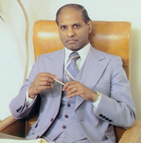


 Economics Professor Explains